



by Tricia Dewey
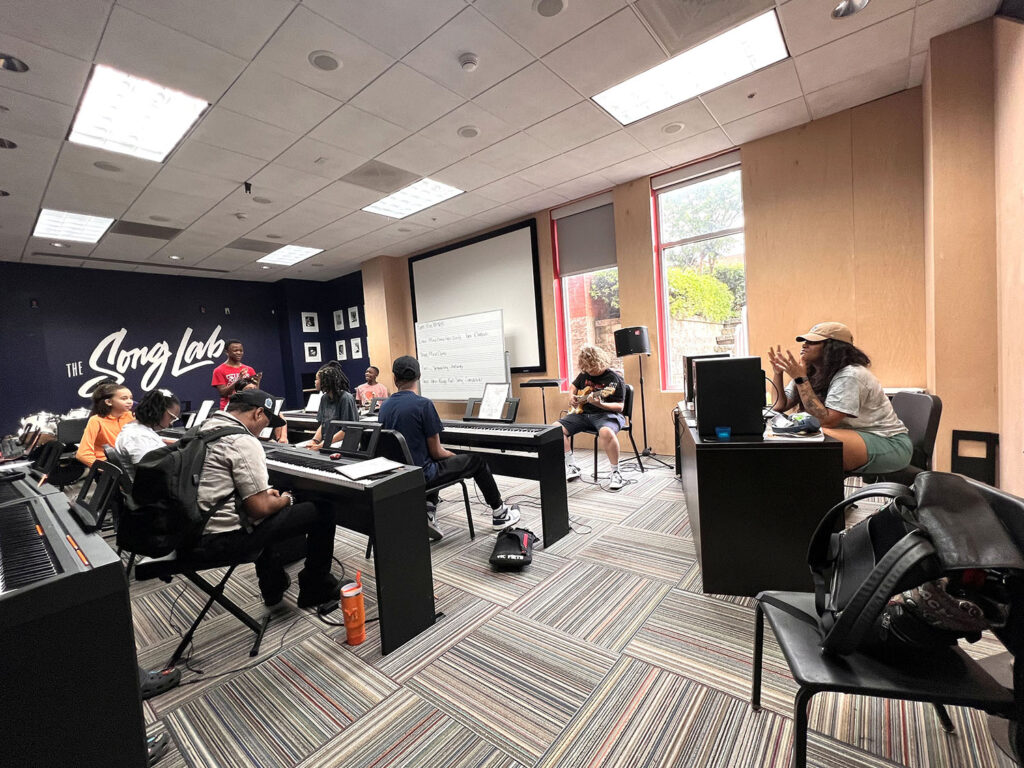
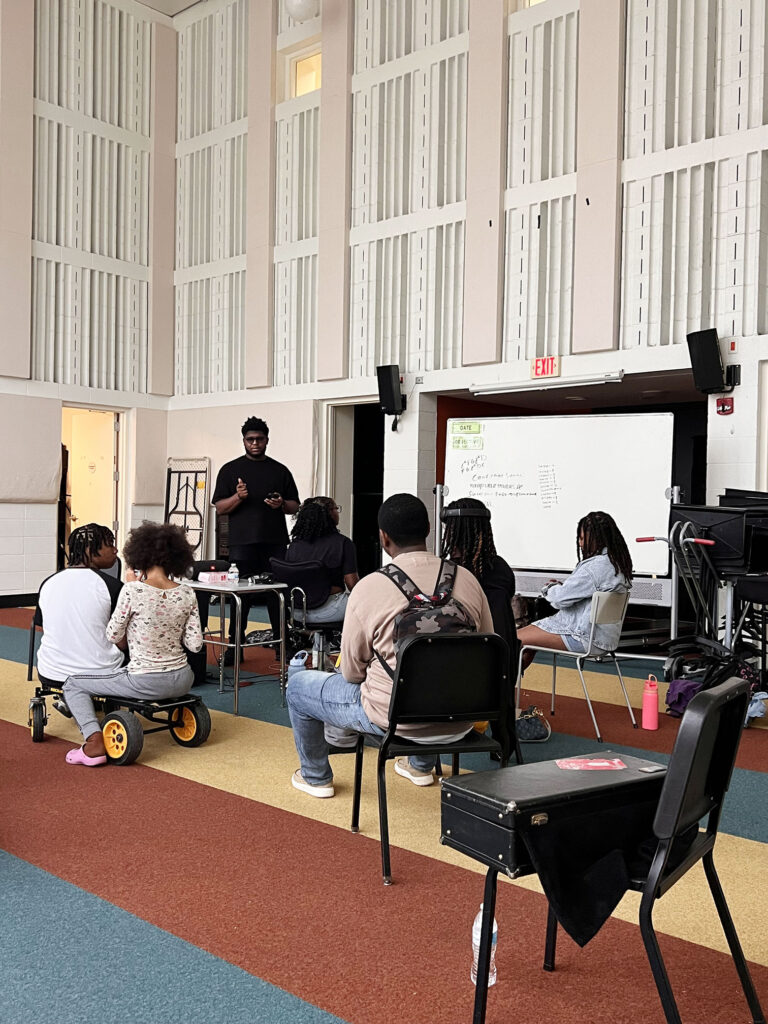
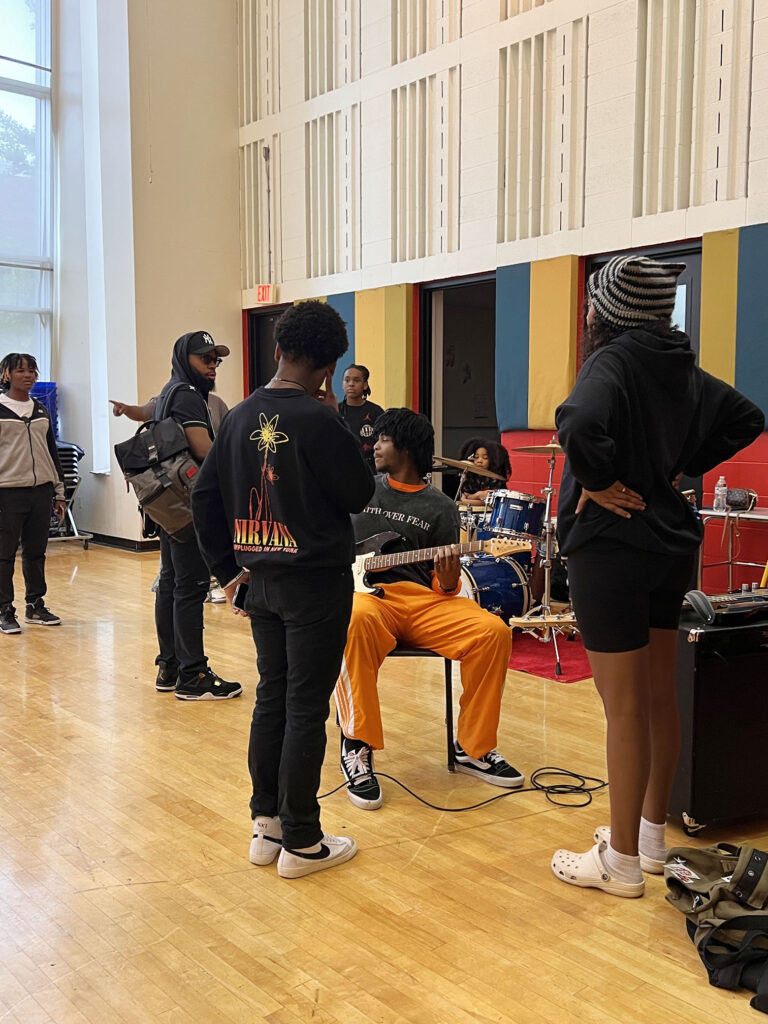
On a humid mid‑June morning, the halls and classrooms at Stax Music Academy in South Memphis buzzed with activity. Students were in the midst of the three‑week Summer Music Experience Camp. In smaller rooms, young musicians practiced keyboards, guitars, and drums, while in a larger gathering space, Grammy‑award winner Boo Mitchell—renowned music producer—spoke about the music business.
The camp culminated in the June 28 Stax Music Academy Summer Showcase at the Overton Park Shell, celebrating the school’s 25th anniversary. Featuring students from grades 6 through 12, this year’s performance spotlighted the blues.
The story of the Academy and the broader Soulsville campus at 926 McLemore Avenue begins with a visionary group of Memphis civic leaders and former Stax Records employees in the late 1990s. Their goal: to rebuild a space for local youth to learn about Stax’s musical legacy and to honor the original label. That effort gave birth to the Soulsville Foundation, which raised $20 million—including $6 million in initial funding—to make the vision a reality.
The Academy opened its doors to 125 students on June 1, 2000, and moved to its current campus in July 2002. The Stax Museum of American Soul Music followed in May 2003, and the Soulsville Charter School welcomed its first class of 60 sixth graders in July 2005, with a permanent building opening in 2011.
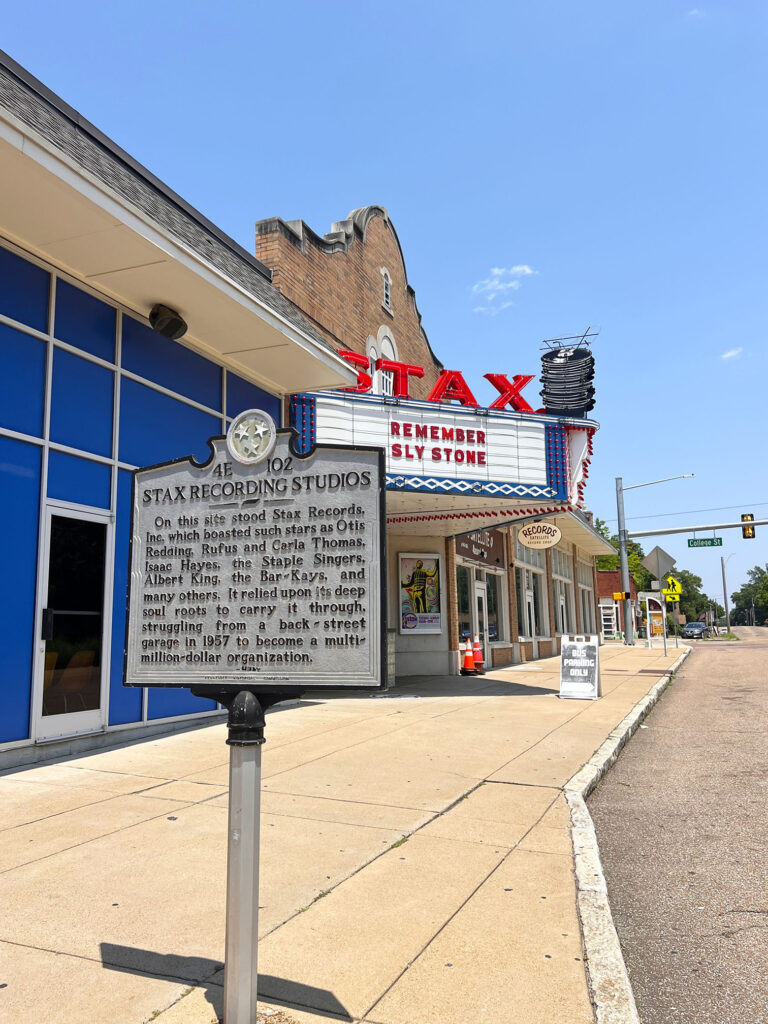
The roots of Stax Records trace back to 1957, when Jim Stewart and his sister Estelle Axton founded Satellite Records in South Memphis. By 1960, they moved into what would become the legendary McLemore location, renamed “Stax” after their initials. Here, they nurtured a creative community: James Alexander of the Barkays, Floyd Newman of the Mar-Keys, and Booker T. Jones all lived nearby—and, as special projects director Tim Sampson recalls, people of all races “came together like crazy.”
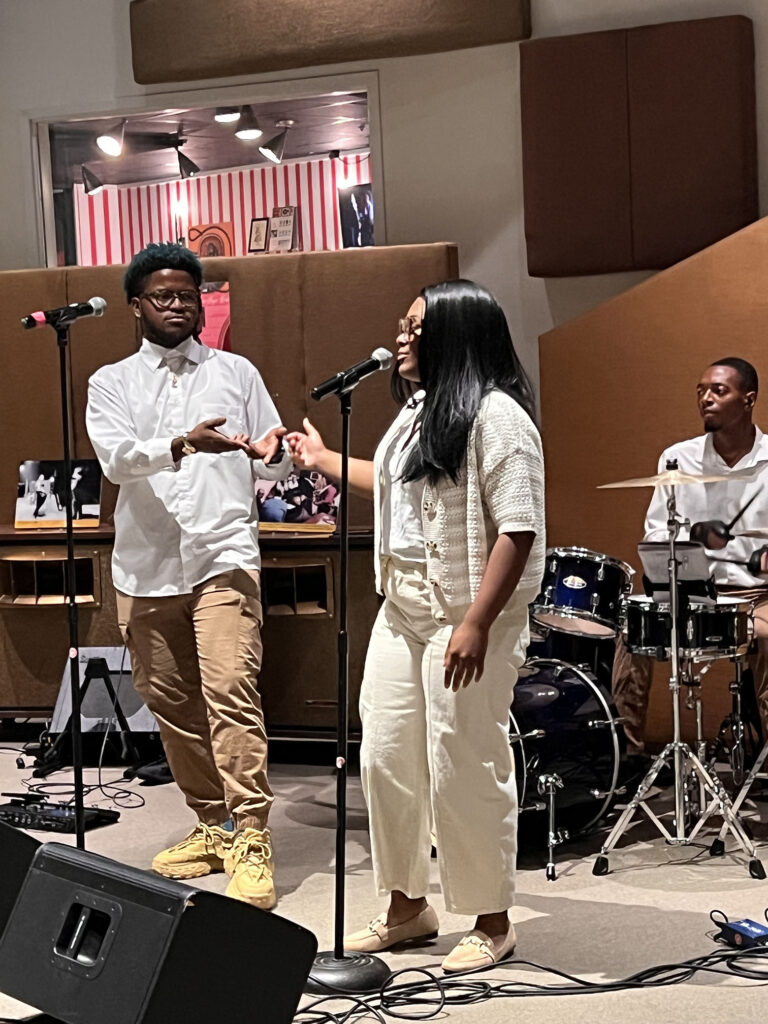
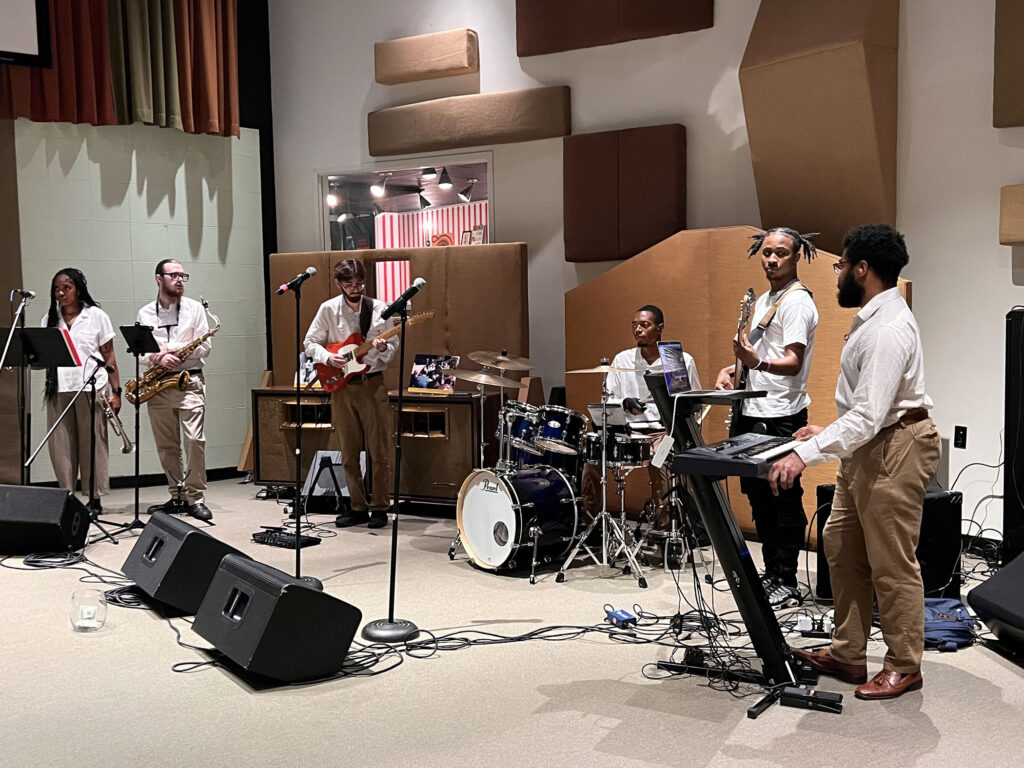
Guitar – Aidan Mills, Drum Set – Billy Jotham, Electric Bass – Manny Gray, Keys – Morrell Pruitte Jr. photos by Tricia Dewey
Stax’s first hit—“Cause I Love You” by Rufus and Carla Thomas—sold 40,000 copies and led to pivotal distribution deals. Soon after, Otis Redding—initially hired as a chauffeur—recorded “These Arms of Mine” during a rough session, launching a career that produced classics like “Respect.”
The late 1960s brought a “soul explosion,” with 30 singles and 27 albums—including Isaac Hayes’s multi‑platinum Hot Buttered Soul. Financial struggles hit in 1975, and by then Stax had declared bankruptcy. The studio lay vacant until its demolition in 1989; a historical marker was placed in 1991.
Fast forward to today: the Soulsville Foundation’s vision thrives. The charter school now serves over 650 students from sixth through 12th grade, all heading to college. Its after‑school Stax Music Academy, with 100 students year-round and another 100 in the summer, offers vocal and instrumental training—covering genres far beyond the traditional Stax catalog. Notably, music icons like Faith Hill, Bono, John Legend, and Justin Timberlake have visited; Timberlake even contributed a state‑of‑the‑art songwriting lab.
Alumni achievements include songwriting credits for Rihanna and Jay‑Z, and performances by MonoNeon and Kameron Whalum, who recently sold out the Green Room at Crosstown Arts. Meanwhile, the Stax Museum draws nearly 60,000 visitors each year—with over 1 million since 2000—and houses more than 3,000 artifacts, including restored instruments, costumes, Isaac Hayes’s custom 1972 Cadillac Eldorado, and the iconic Soul Train dance floor.
Thanks to the shared campus, students benefit from rich crossover opportunities. At a recent event, the 926 Stax Alumni Band played in Studio A, blending history with live performance. As Paul McKinney, director of student success and alumni relations, said, these performances “are the connection between Stax and soul, rhythm and blues.” The audience danced to classics like “Try a Little Tenderness,” “Respect Yourself,” and “Do the Funky Chicken”—a testament to the enduring power of this music.
Otis Redding once said, “Music has the power to heal, to mend broken hearts, and to bring joy to even the darkest moments.” (Though he didn’t explicitly say “soul music,” it’s clear what he meant.) Today, the Soulsville Foundation has come full circle—powerfully connecting a new generation to the soul of music.

