


by Briar Brakhage
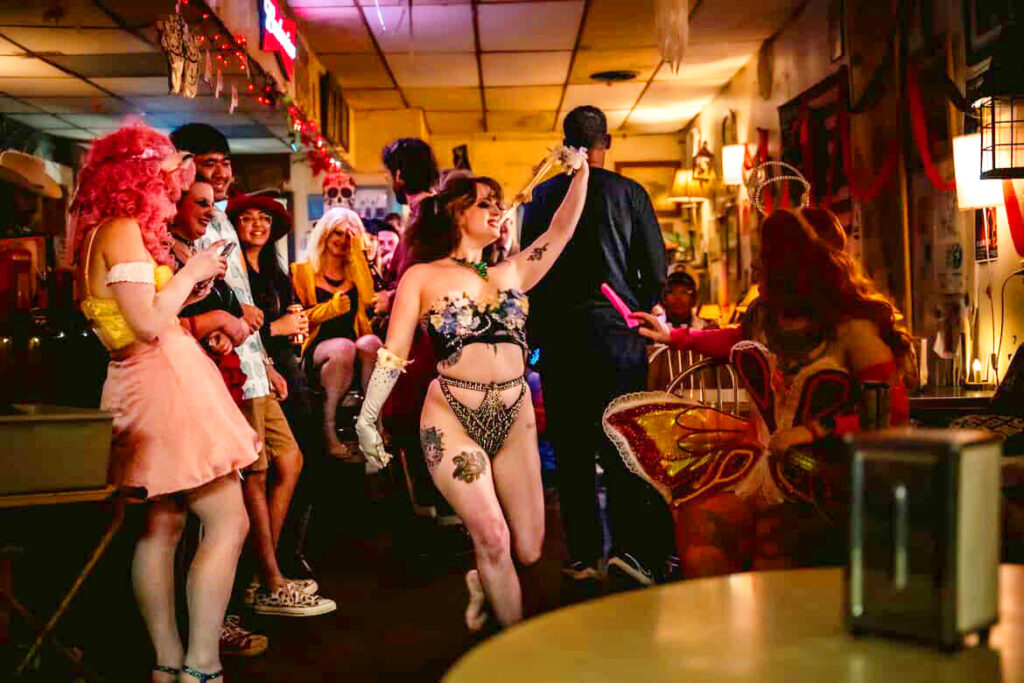
It was a Thursday night in Midtown Memphis, and a karaoke singer tied their oversized flannel around their waist over a crushed-velvet mini-dress, howling at the moon while they sang “Out Tonight” from the musical Rent to a crowd of regulars and rapt newcomers. The eyes of the crowd followed the appearance of the first burlesque dancer of the night, who effortlessly embodied the feline, flirtatious character of the song as she shimmied and shed layers from the pool table to the kitchen. The combination of burlesque and karaoke found at Lamplighter Lounge is a rare and novel experience. Karaoke is not so much a show one watches as it is an activity—an opportunity, some may say. The karaoke audience are all potential performers, and each performer spends most of the night as an enthusiastic member of the crowd. While burlesque is not the same, at Lamplighter the sense of community blurs the line between performers and audience.
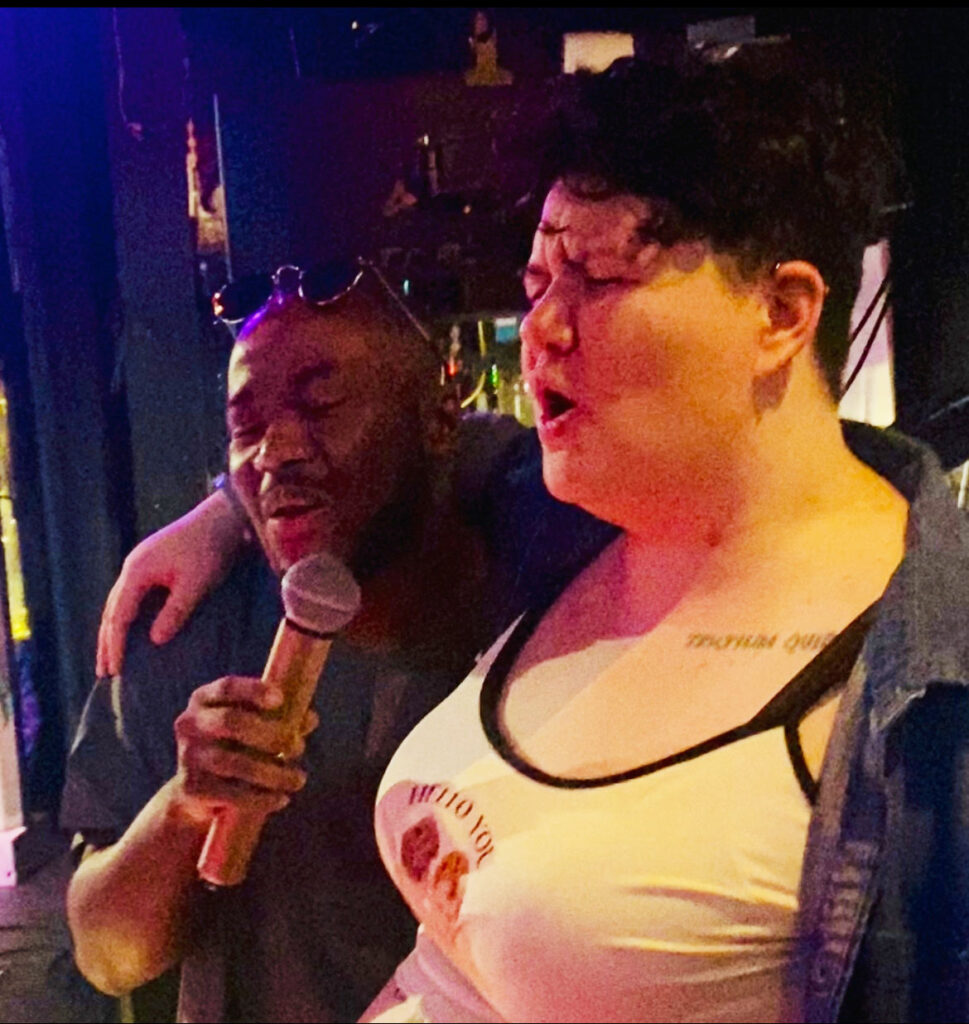
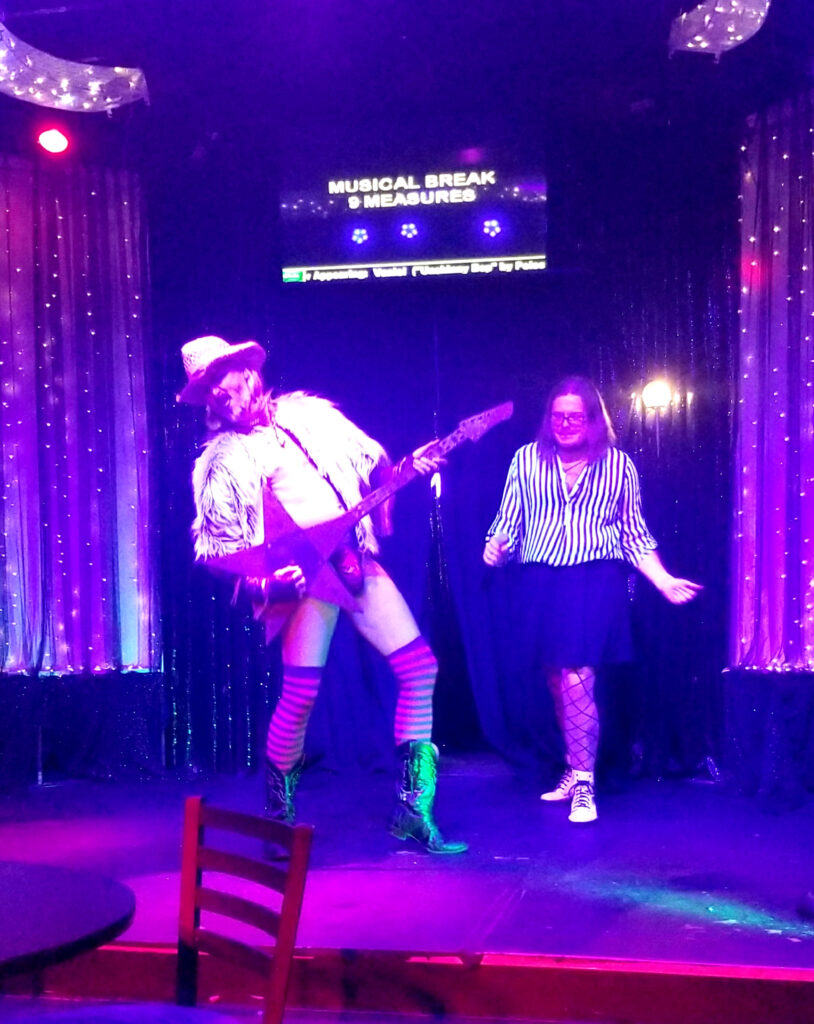
When deciding to start karaoke nights on Thursdays, Laurel Cannito, co-owner of Lamplighter Lounge, wanted hosts who knew how to make people feel good—and who were able to share the stage with singers in an open, encouraging, and inclusive way. Karaoke has the distinction of being the most inclusive stage accessible to many. As Lamplighter regular Jeri Katz put it, karaoke is one of the rare opportunities for casual performance—for anyone. At any regular karaoke night, some spectacular singers croon and belt with the best, and the stage is just as open to the tone-deaf, the nervous, and the inexperienced. In community-oriented spaces like Lamplighter, all karaoke performers are welcome to share the mic. Even the concept of burlesque karaoke was born from conversations within the bar, says Laurel. After years of karaoke nights frequented by local burlesque dancers, the idea appeared organically, workshopped among friends over a bartop instead of a conference room and a dry erase board.
That community angle is a lot of what puts Lamplighter Lounge on any list of queer karaoke spaces in Memphis. Despite never advertising specifically as a queer bar, Lamplighter has fostered an inclusive and celebratory atmosphere for queer people, and the effects are the vibrant displays of queer joy regularly at the mic or dancing on the pool table. Jeri Katz compared the DIY ethos of Lamplighter to the lived experiences of many of its patrons, saying that self-creation is survival for queer and trans people, and queerness is inherent in a punk DIY space. Laurel described the bar as an art project between herself and Chuck Wenzler, where they have created a space that doesn’t tolerate some behaviors, and the result is a space especially safe for queer and trans people. A specific ripple moves through the room when someone performs “Somebody to Love” by Queen on karaoke night. While we accept that straight people can be deeply affected by the song, there is something special about singing that song in a queer space. The mounting energy of the performer, the ripple of participation as the room sings backup—one “somebody” at a time—the near feral intensity of joining the choir in the bridge, and, yes, the mystical energy of the queer heritage of Freddie Mercury pouring out of every single person moved to sing, all culminate in a shared experience of both queer joy and queer longing that can only reach its peak in spaces that truly celebrate queerness.
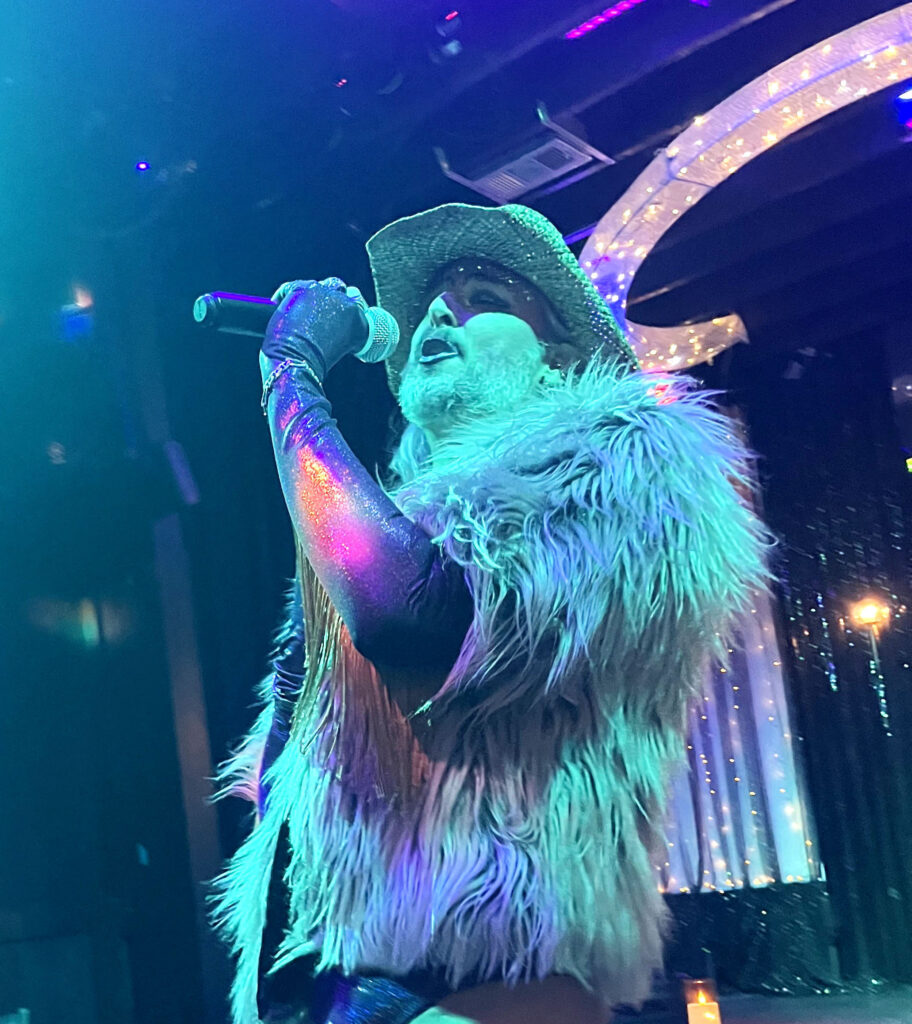

Few understand this celebration better than karaoke host and burlesque performer Papa Chubb, who describes his experience as a karaoke host as magical, noting that while karaoke sometimes has an association with people doing a lot of drinking and not a lot of quality singing, there are many people who take it very seriously. For many, karaoke is their chance to perform; “it is their moment in the spotlight,” he says. “It gives them a chance to be the person they always wanted to be.” There are myriad reasons we cannot always live as the person we fantasize of, whether that fantasy is as a rockstar or a cowgirl, but karaoke encourages the suspension of disbelief just long enough to finish a song. To Papa Chubb, the environment of karaoke is created by the shared passion for singing and a respect for the courage it takes to get on stage. “You can have opinions,” he says, “and you can have opinions about how people live their lives, but that’s not what karaoke is about. Karaoke is about encouraging people, because you understand how special it is to take that microphone and have that moment.”

Dru’s Bar has karaoke nearly every night, with varying crowds. You can spend a week watching the ebb and flow on stage, with such characters as the earnest “Bridge Over Troubled Water” by Simon and Garfunkel, the raunchy “Animals” by Nickelback, the pleading “Creep” by Radiohead, the sultry “Freak Like Me” by Adina Howard, and the aching “Back to Black” by Amy Winehouse. Singers can don large tulle boas, neon wigs, and oversized glasses to fit the part they want to play, whether that be a pop star, a seductress, a rageful teenager, a boss, or anything else. Sometimes, you might see Papa Chubb on the karaoke stage at Dru’s Bar, perhaps in a cropped shag coat, a cowboy hat, striped knee-high socks, and little else. Karaoke, like being queer, says Papa Chubb, is about letting your truest self shine. “It gives you the opportunity to be the person you really are inside that you don’t always have the courage or opportunity to be,” he says, “and karaoke is a lot like pouring your heart out—which takes courage!” In his purple lipstick and studded cowboy boots, he was quick to add that life is much more rewarding if you give yourself the opportunities to live that vibrant truth. All sorts of people can find acceptance on stage at Dru’s and many bars like it. “When people take to the stage to have their moment, it doesn’t matter what walk of life they are—the crowd is enraptured. The crowd is ready to see what this individual is going to do,” Papa Chubb says with conviction.
It’s one thing to feel accepted and celebrated in places like Dru’s and Lamplighter, both where community and personal expression are valued in nearly equal measure, encouraging an organic level of roughness around one’s edges. But what about a more curated space? Every Sunday at Cameo is karaoke night, hosted by local drag queen Brenda Newport. An environment that values a detailed aesthetic and a perspective of joyful indulgence in the immediate pleasures of fancy drinks and partying, Cameo is not the kind of bar one imagines when picturing a comfortably divey karaoke bar. Decorated meticulously with taxidermy and disco balls, Cameo also deliberately declares the bar a safe space with subtle, tidy signals for the community, like prominently placed pride stickers. On a recent Sunday karaoke night, there were some regulars, but Cameo is about having fun tonight—not necessarily habit-building—and many of the singers expressed how rarely, if ever, they get on stage. The space is intimate, and the crowd cheered as a pair dueted “Lips of an Angel” by Hinder, swooned to “Blue Skies” by Frank Sinatra, and felt the power of “Love Is a Battlefield” by Pat Benatar. When one woman took the mic, she immediately expressed her nervousness. Brenda, the host, cheered her on as she pressed play on the track. The singer nervously played with the ends of her long blue hair for a moment as the music started. Her song starts softly, giving one the urge to lean toward her just a little to hear better. Any semblance of nervousness in the singer fell away as the volume of her deep and remarkable baritone grew in her enrapturing performance of “If I Can’t Love Her” from the classic musical Beauty and the Beast. The whole room turned to her in awe and reverence, and the rapturous applause brought people to their feet. As the hooting and hollering died down, Brenda poked fun at the blue-haired singer for having been nervous, given her powerful talent.
Karaoke gives you an opportunity to put on a mask and perform a fantasy, but it also offers the opportunity for vulnerability. Karaoke is an opportunity to uncover real truths. Bartender and longtime karaoke performer Maggie Trisler shared some of her experience singing karaoke over her lifetime, including the span of her gender transition. Karaoke gave her the “comfort zone of performance,” Maggie says, explaining, “I could be me, and then I could get up and be this completely different person, and then I could go back to being just me. I slowly got more comfortable switching those roles and therefore becoming more comfortable being just me.” Performance of a fantasy or alternate self can reveal as much as it masks. The young queer person who hurts their knee while emphatically performing “Mama” by My Chemical Romance is not hiding behind any mask, nor is the trans person who perches on the edge of the stage, sweetly crooning “My Way” by Frank Sinatra. Karaoke, more than many things, is an invitation not to mask yourself, but to reveal yourself—with your song choice, your dance moves, your jokes, your gusto, the way you play with gender, on and on and on. Karaoke has the magical distinction of being at once very light, casual, and fleeting—and a space for exploring and revealing one’s true self. The karaoke stage is one suited for the punk bar, the gay bar, and the fancy cocktail bar alike, all joyfully boasting an encouraging and accepting crowd. The karaoke stage is the perfect place to be anyone you want to be—even your very own self.
Memphis is blessed with a lot of karaoke nights. Lamplighter Lounge has karaoke most every Thursday, with every other Thursday featuring burlesque karaoke. Dru’s Bar has karaoke every night of the week. Cameo has karaoke every Sunday. OUTMemphis hosts Queeraoke every first Friday. Other recommended locations include Canvas, Young Avenue Deli, and Growlers. Check out any one of these and many others, invite some friends to cheer you on, and see what karaoke night reveals for you.

