



by Cary Vaughn
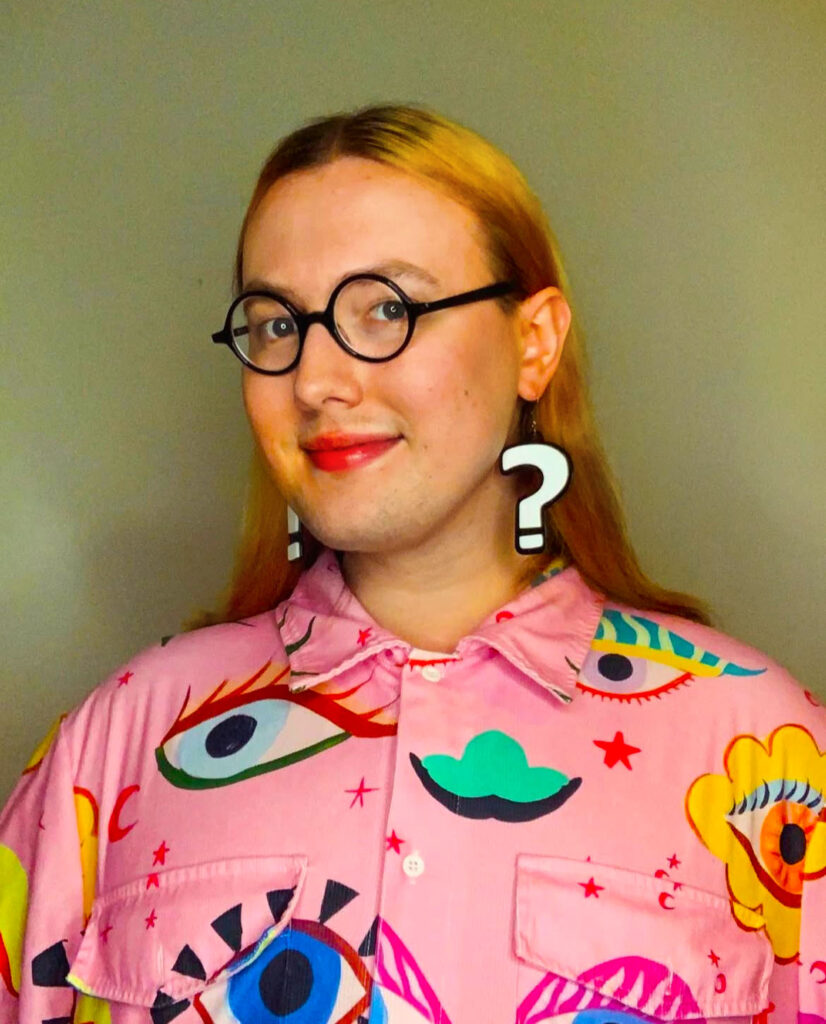
Keegon Schuett, a gender non-conforming playwright from Memphis, Tennessee, has been crafting original works since the early 2010s. An alum of Curious Theatre’s Curious New Voices program, they’ve written trans-centered works like Pilgrimage, besos, and this dry spell. Their plays don’t just bend reality—they lovingly dismantle it. From cactus-bodied lovers to platypus pregnancies, their work invites audiences into surreal landscapes where queer identity, grief, and transformation take center stage.
As the winner of the 2024 Yale Drama Series Award for this dry spell, Schuett proves that imagination isn’t just a tool—it’s a form of resistance.
A resident writer with Voices of the South, their play Chicken—about setting the boundaries of an open relationship during COVID—premiered at Memphis’s Quark Theatre in June 2025.
So you have this whole Yale award thing that proves how smart and prestigious you are now.
It sort of ruins everything, though, because I like to think of myself as a perpetual underdog, and winning something that’s actually kind of big—it ruins that narrative.
You’re turning mainstream and ruining your reputation as an artist.
Probably! Though it’s unlikely I’ll ever be mainstream.
Your style of art is extraordinarily unique. It’s fascinating how your imagination seems to be boundless in terms of story construction. Some of the plays you write, I can’t imagine many would have ever thought, “This would make a great stage play.” this dry spell, for example. Did you always think that subject was something that could be easily translated into a stage play?
I didn’t at first, actually. I should give credit. I’m in the Voices of the South Writing Cabaret, and I’ve been in that group since 2020, when COVID shut everything down. I had an experience where I was making out with a stranger, and I was, like, “Oh, you don’t want to get involved with me,” and my next thought was, “I’m a cactus. You’ll only get hurt.” So I wrote a poem about that and shared it with the group. One of the other writers said, “Why isn’t this a play? Do you think it could be?” And I got defensive because I like to think of myself as interdisciplinary. So I said, “It’s a poem! It works as a poem!”
But then I sat with it. Ultimately, I said, “Well, what if it’s a 10-minute play?” But I just kept writing scenes. The play could’ve been a poem. It could’ve just been a thought in my head. But it kept growing into a weird opportunity to explore the roots of much more. For me, a play is a question, and usually it’s a question I have for myself that I want answered. I don’t always come up with an answer by the end of the process, but it’s about the exploration—one that can lead other people to ask themselves similar questions and go on an intellectual, existential journey that’s hopefully entertaining as well.
I’m curious about what first inspired you to write plays, particularly one that taught you to be boundless like this?
I’ve always been the sort of person that likes to try everything. But I wasn’t really sure I was going to be a playwright until the end of undergrad, and by then I had written several plays. It was just another thing I was doing. I did a writing intensive in Denver at Curious Theatre, and I wrote in my bio that I was going to graduate school for playwriting—and I had never had that idea before. I love that I put it in there with no real plan. It was pure manifestation.
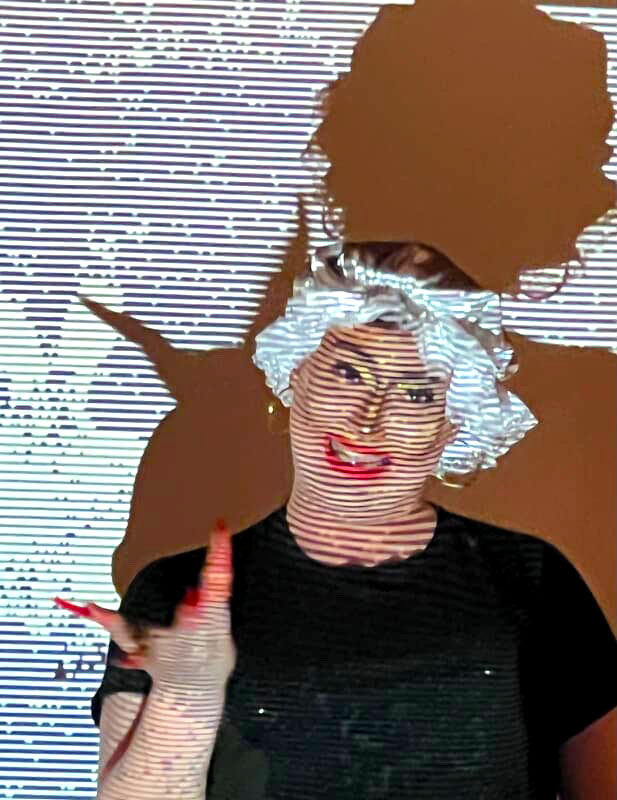
Once I got to graduate school, I was in a cohort of 12 writers and realized how young and green I was. So I was really insecure all of a sudden, and I started doing drag performance. I was trying to live life in a way I had never lived before—messy and free. And that, I think, influenced my current voice. There’s a lot of levity and sloppiness in celebrating the way that lines get blurred and that things don’t have to be defined and concrete. That’s the sort of thing you learn in nightlife.
No kidding?
There’s a different idea of liberation—kind of like punk rock performance. I fell into a crowd of people that were kind of the weirdos of Chicago drag nightlife, and I became addicted to it. For me, being in graduate school was so serious, and we were artists with a capital A. But when you’re performing in drag, there’s a freedom to say, “Well, this is a three-minute experiment that only these people are going to see.” And strangely enough, I started doing more writing-based things in my drag, and it all kind of blended together.
I just really believe in trying new things and being adventurous. I don’t like sitting down to write something that I know exists already in some form. I like the idea of writing something that you’ve never seen before. And I don’t believe in editing myself before I’ve done it. There’s a lot in the writing process that surprises me, and I like to preserve that space where I can be surprised.
Something I find interesting is that so far you haven’t used the word “courage.” I would have thought that speaking to someone about their uniqueness and non-conformity, especially in the South, you would have described yourself as courageous by now.
I don’t know that I would describe myself as courageous. I think I’m just deeply curious. I like to explore. I like a sense of adventure. Maybe it’s the Sagittarian in me. Honestly, there’s a recklessness to what I do sometimes. Like, I’ll go and see one of my plays and wonder, “Why did I share that weird, private thing about myself in that character?”
Yeah, how do you feel about that? Because when you write something as abstract as some of the work you’ve done, it can get interpreted in so many different ways.
And it does!
How do you feel about that?
I like for the work to be expansive. I find it boring when things are defined in a textbook way. What makes it complicated is doing a play like this dry spell, because people will ask, “Who do you see as this cactus?” And I’m like, “What does that even mean?” But I love how that opens discussions about who can play what role, because it’s been done by people with different gender expressions and different racial backgrounds.
I like to write in a way that can invite other experiences, and I always find that people from different backgrounds end up improving the play and making it richer. I love that my work can mean many different things to different people. But it offers a strange wrinkle in the process of sharing work, because people will be very free to tell you what they don’t like about characters that are actually a reflection of me.
How do you not take that personally?
I just push it down deep within me.
As healthy people do.
Yeah. It’s probably growing into a tumor somewhere. Or hopefully into a play.
Has there ever been an idea that was so weird that even you said, “I don’t know about that”?
Hmm…that doesn’t sound like me.
Playwright Keegon Schuett doesn’t set out to be groundbreaking. They simply refuse to create within the confines of expectation. Their work asks questions that don’t have easy answers and tells stories that feel wildly abstract yet deeply personal.
In a world that often favors clarity over complexity, Schuett invites audiences to lean into radical ideas while rewriting the rules of storytelling for the stage. For anyone with a story too unique or strange to share, Keegon’s award-winning work offers validation to be bold, bizarre, and beautifully honest. If you’re still wondering whether your voice and your story belong out in the open, let Keegon be inspiration and proof that yes, they absolutely do.
Explore more of Keegon’s work at keegonschuett.com.

