



by Ray Rico
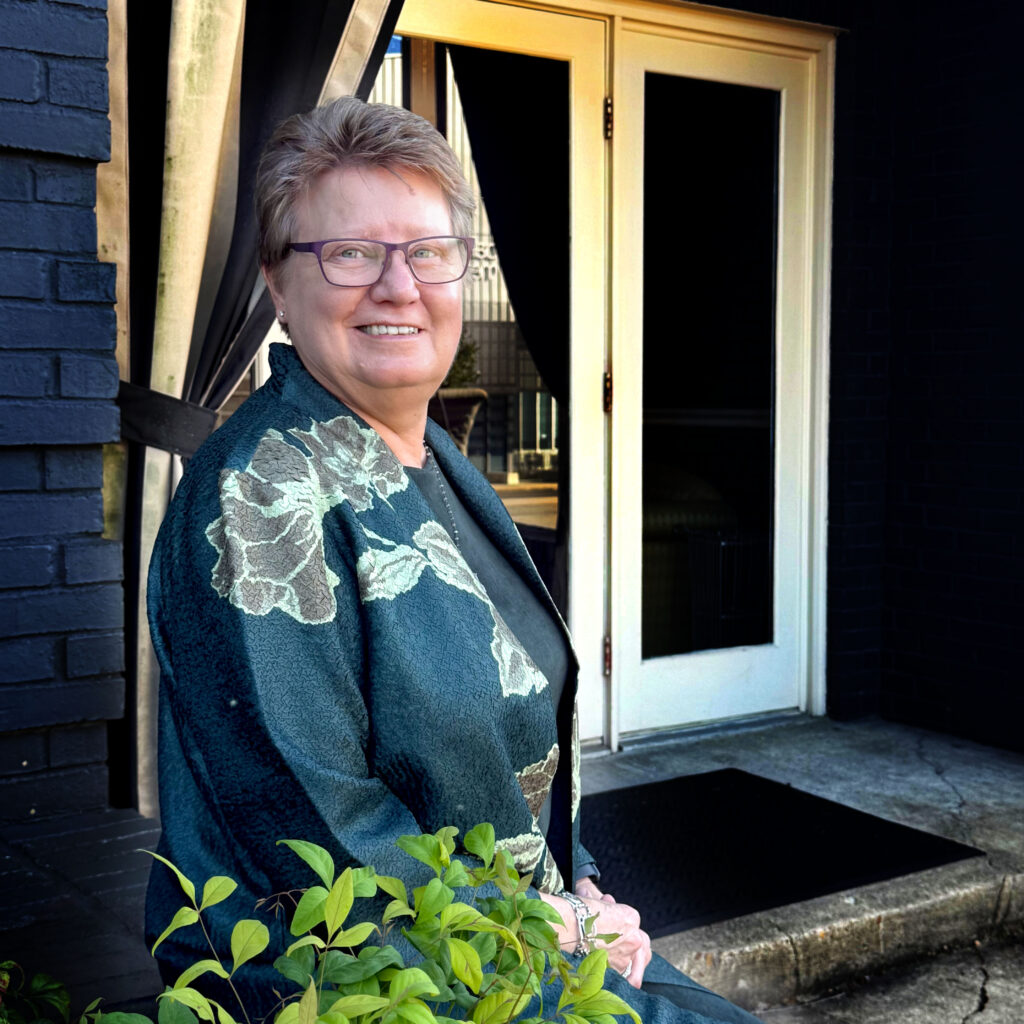
For nearly four decades, Susan Mackenzie, she/her, has been a steadfast advocate for families in Memphis, Tennessee. As a practicing attorney and an openly lesbian member of the community, she has dedicated her career to family law, adoption, and protecting the legal rights of LGBTQ individuals and their loved ones. Recently, she celebrated a major milestone: her 100th adoption. For Susan, this achievement represents more than a number—it represents stability, affirmation, and the joy of creating legal families where love and caring are central.
“The kids are getting stability and reconfirming that this is their family. And the gay male adoptions, those are fabulous. Beyond contributing sperm, possibly, most of that is adopting a child that’s not related to them by blood,” she says.
Lesbian adoptions, she notes, can be bittersweet. “Most married gay men who are having children are not biologically related to the child so they have to do an adoption. But today, most married lesbian couples have at least one of them gave birth to the Child during the marriage, and they really shouldn’t have to adopt their own children. But they have to to create the legal parent-child relationship. A birth certificate with both parent’s names on it only creates a presumption of parentage that can be rebutted with a DNA test. And we’ve seen how important it is from courts in Oklahoma and Alabama who refused to acknowledge parentage of a parent of a child born during lesbian marriages because they can’t prove a blood relationship. Fortunately, both of these instances were overturned on the Court of Appeals. But a lot of money and heartache was expended to finally get the right results. While they’re bittersweet, they are very happy moments.”
Susan emphasizes that the adoption process is treated with care and celebration in her practice. “The gay and lesbian adoptions are being treated by our Chancellors just the same as all the other ones. There’s clapping when it’s granted, photos with the judge, and one judge even gives treats to the kids. I’m really enjoying the adoptions becoming a larger part of my practice.”

Legal Planning and Family Wellness
For Susan, legal advocacy extends far beyond adoption. She stresses that estate planning and protective legal measures are crucial for any family, regardless of age. “Estate planning is so important. It doesn’t matter whether you’re 18 or 60—you’ve got to protect your family. Marriage does provide some protections, but it doesn’t provide everything. You need to do your wills, your powers of attorney for healthcare, your general durable powers of attorney, and a living will. If you’re in a major accident or dealing with a serious illness, you need to be in control—not the hospital, not the system, not someone else.”
For LGBTQ families, the stakes are even higher. Susan has seen families navigate inheritance challenges and societal biases that can threaten legal stability. “You never know. That’s why you’ve got to protect yourself, your future well-being, and your stability,” she says. She points to growing challenges faced by transgender youth, noting the impact of laws that restrict gender-affirming care. “Parents are trying to support their child’s gender identities, and they’re being harassed, ridiculed, and stymied because trans youth have become the new target of the radical right. Some are considering leaving the state, trying to find a place where they’re safe and can get gender affirming medical care. One of the biggest issues facing our community is transgender youth—and the repercussions faced by out trans youth. It’s awful.”
Mediation, Collaboration, and Legal Support
In addition to estate planning, Susan advocates for mediation and collaborative law as tools to protect families while minimizing conflict. “When people go through divorce or separation, I don’t think it has to be a crash-and-burn situation. There’s really no need for that because it doesn’t get you anywhere—except costing you money and dragging things out in the long run. My goal is always to try to work things out first.”
“Mediation allows people to come together and work out a resolution, instead of having a court cram one down their throats. It can save money and emotional pain,” she says.
Collaborative law, she explains, is a newer approach in family law. “Everyone agrees to be forthright, putting all your cards on the table, and you’re approaching it as two adults trying to reach a resolution, recognizing the needs and realities of the situation. You work with attorneys, a CPA, a psychologist or counselor who acts as a facilitator, everyone helping to navigate financial and emotional considerations. It’s non-adversarial, and it’s designed so the couple doesn’t go to court unless absolutely necessary. And if the collaborative process breaks down they both have to hire new attorneys as the collaborative attorneys cannot continue their reprsentation It’s an excellent tool for LGBTQ families concerned about the judicial process.”
Susan stresses that emotional well-being is an essential part of the picture. “When you’re going through a stressful life event, you don’t need to make it worse. The goal should be to heal and move forward as strongly as you can, with as little collateral damage as possible. That’s what mediation and collaborative law are all about—helping people through something uncomfortable, sad, and painful, but doing it in a way that doesn’t make it harder than it already is. I’m proud to bring that into my practice and help people find healing where they can.”
Practical Advice for Parents and Guardians
Beyond legal processes, Susan also advises on protecting children and planning for unforeseen circumstances. “Nominate guardians—who do you want raising your children if you can’t? Set up a trust, designate who manages the funds, and define when and how your children access it. If you’re a single parent, it’s especially important to have someone who can step in in an emergency to care for your kids.”
Susan Mackenzie’s career demonstrates the vital intersection of legal protection, family wellness, and community advocacy. Her work continues to ensure that love, care, and justice guide family life in Memphis and beyond.

