



by Chris Reeder-Young, M.A.
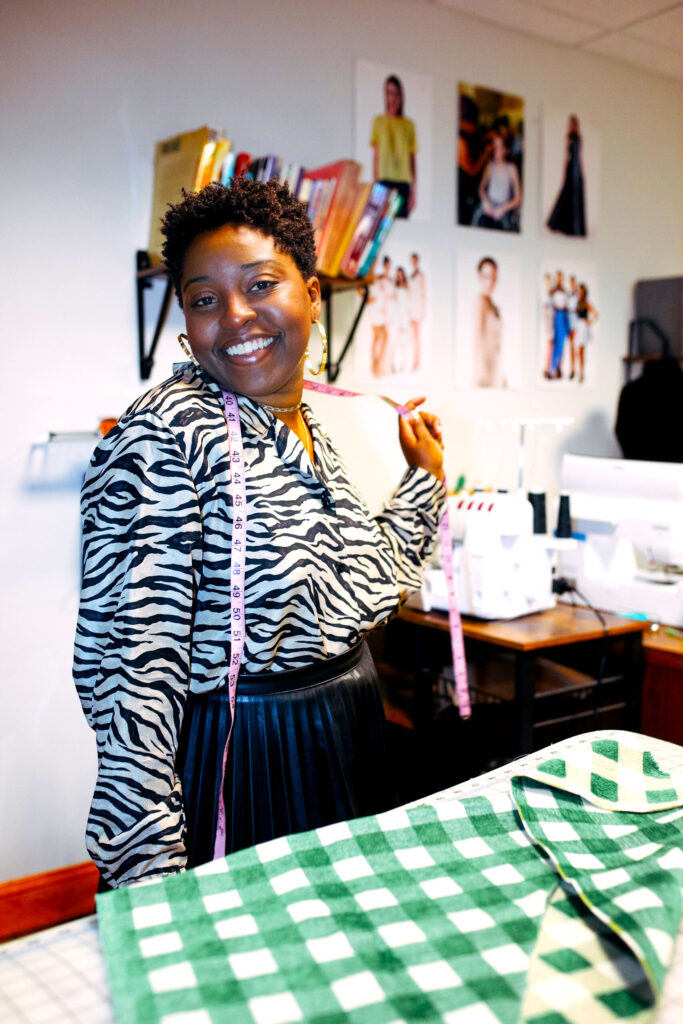
photo by Erica Haskett
For Cari Harris, sewing became more than a craft. It became a communal language. A way of discovery. A way of shaping not just fabric, but identity, confidence, and community.
Her story begins, like many Memphis stories, with roots that evolve in creative ways. Growing up in a military family meant constant movement, adjustment, and learning how to belong in new places.
“Because of the history and legacy of the city, I had a deep fascination with the intersections between the built and natural environments. Since my academic interests were so rooted in Memphis, it was an easy choice to stay for college at Rhodes.”
Memphis quickly became her favorite place.
Sewing was not her first career path, and her early interests in how environments are built and preserved did not immediately translate into fabric arts. Art was always there, a quiet presence, while sewing remained just out of reach.
It was not until the stillness of the pandemic that something shifted. Her home became an unexpected creative space. A closet turned into a sewing station where she began altering secondhand clothing with sustainability in mind.
“I loved the quality of the vintage pieces I found, but as a modern-day person with a modern-day body, I realized that if I wanted to achieve the look I had in mind, I needed to learn how to sew. I bought a machine, and it was a full year before I found the right teacher, Ms. Susie Hunt, who encouraged me to sew creatively.”
From there, sewing expanded outward. What began as a personal discovery grew into a professional pathway through work at a Midtown atelier and training alongside fabric arts professionals, including Whitney at Pile of Threads and Timone at Slim Threads. Sewing became precise, technical, and deeply influential across communities.
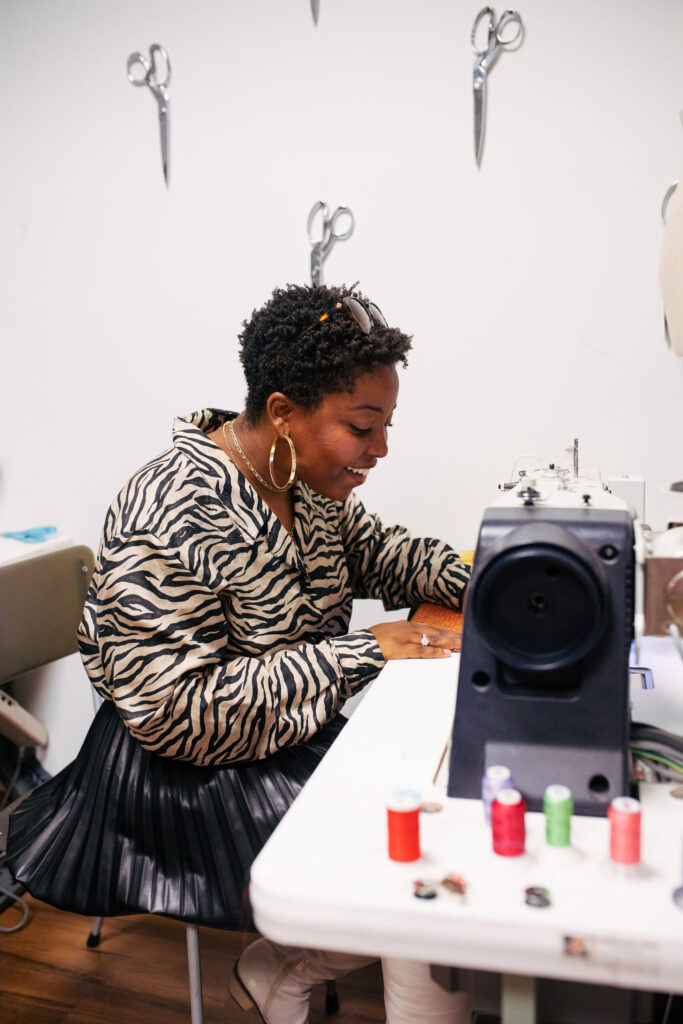
photo by Erica Haskett
From Cari’s Heart to Yours
Many people know the feeling of being mismatched in their clothing. When something does not fit, the blame often falls on the body rather than the garment.
“One thing that remains consistent is that people see their clothing and physical presentation as an extension of themselves. When people cannot find clothes that fit, they often interpret that as something being wrong with them, when it is really a reflection of the narrow standards of clothing manufacturers. They prioritize mass production and low cost, which often comes at the expense of quality and inclusive sizing. Tailoring and sewing remind people that it is not them, it is the clothes.”
Sewing shifts that narrative. It restores agency and self-compassion, particularly for LGBTQ+ individuals navigating identity and visibility.
“Most clothing is designed to fit a very narrow subset of human bodies, which can be limiting when you are trying to develop and affirm your identity. Sewing gives you the ability to shape how you want to be seen in a world that might not always acknowledge you.”
Sewn Together, Reaching Community
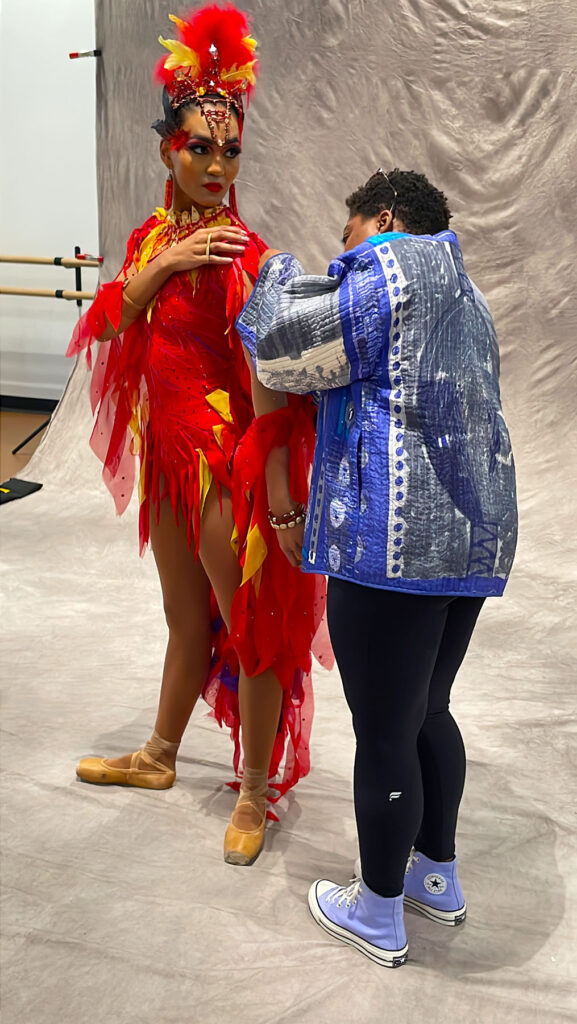
That same care carries into Cari’s workshops, where sewing becomes a shared experience. Each class reflects the people in it. The goal is not perfection. It is empowerment.
Take the Western Wear Sewing Workshop. On the surface, it is playful. Participants prepare outfits for a concert using fringe, rhinestones, and denim. Beneath that, the focus is accessibility and inclusion, welcoming creatives of all experience levels, including neurodivergent participants. Some sew by hand. Others use machines. The result is more than a finished garment. It is confidence.
“Many folks had difficult experiences learning from family members in the past, so there is an anxiety there that I try to ease. I also design my classes with sustainability in mind, encouraging people to bring items they already own to reimagine, or to use vintage materials from my collection.”
In more intimate settings, like the Inspired Aging Textile Portraits workshop, sewing becomes storytelling. Over eight weeks, seniors gather not only to learn techniques but to share pieces of their lives. Heirlooms, travel items, and handmade objects are woven into personal narratives.
These works will be featured in an upcoming gallery show at the Brooks Museum, where participants present art shaped by memory, culture, and lived experience. Sewing becomes a form of preservation, translating stories into something tangible.
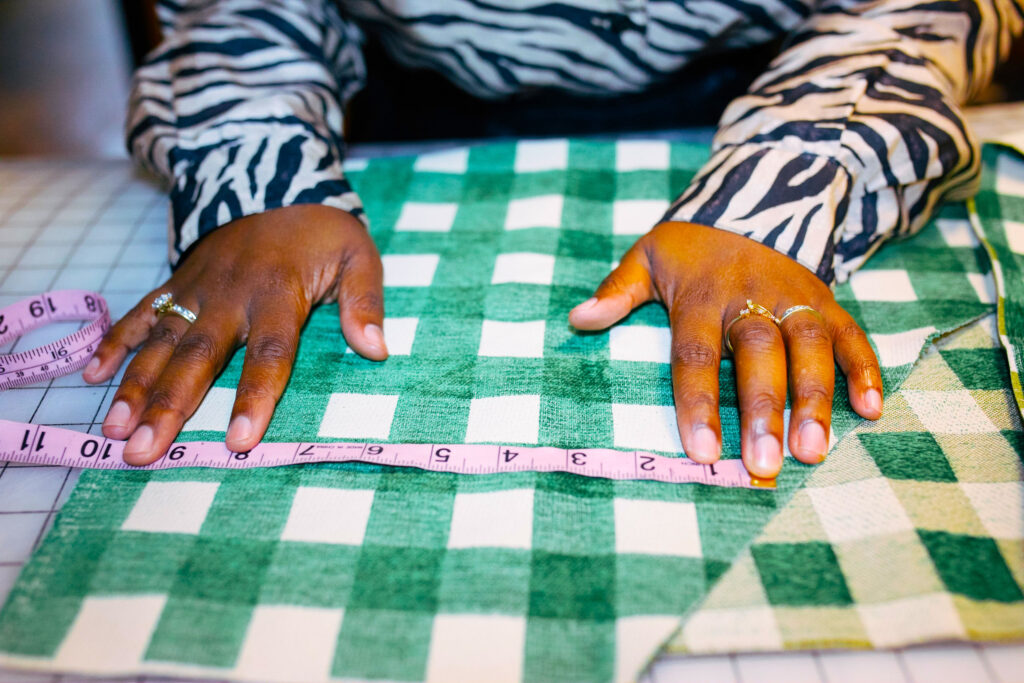
Stitched Across Time and Space
At the core of Cari’s work is a commitment to environmental sustainability.
The fashion industry relies on overproduction and disposability. “At its core, sewing is about thoughtfulness over impulse and recognizing the value in what already exists. Overconsumption has global consequences. Much of what is donated still ends up in landfills or is shipped overseas. The more we explore options like alterations, upcycling, and styling, the more we can keep clothing in use and out of the waste stream.”
Sewing disrupts that cycle. It invites a different question. What can be created from what already exists?
Fabric arts exist at the intersection of the personal and the political. Sewing supports autonomy and self-expression while also engaging broader conversations about labor, sustainability, and value.
“I genuinely believe sewing is a survival skill. The more you use it, the more capable and confident you feel. There are many experiences in life that can make people feel diminished. It is important to create opportunities where people feel skilled, knowledgeable, and confident.”
These intersections continue to expand. Sewing connects to economic conversations around fair wages and labor. It supports mental health by encouraging focus and reducing anxiety. It strengthens cognitive function, particularly among aging populations.
Its most lasting impact is simple. It changes how people see themselves.
In Memphis, where culture and community are closely tied, that transformation does not stay individual. It spreads through workshops, conversations, and shared creative spaces where people are encouraged and valued.
This is where self-discovery meets community. One stitch at a time.

