



by Tricia Dewey
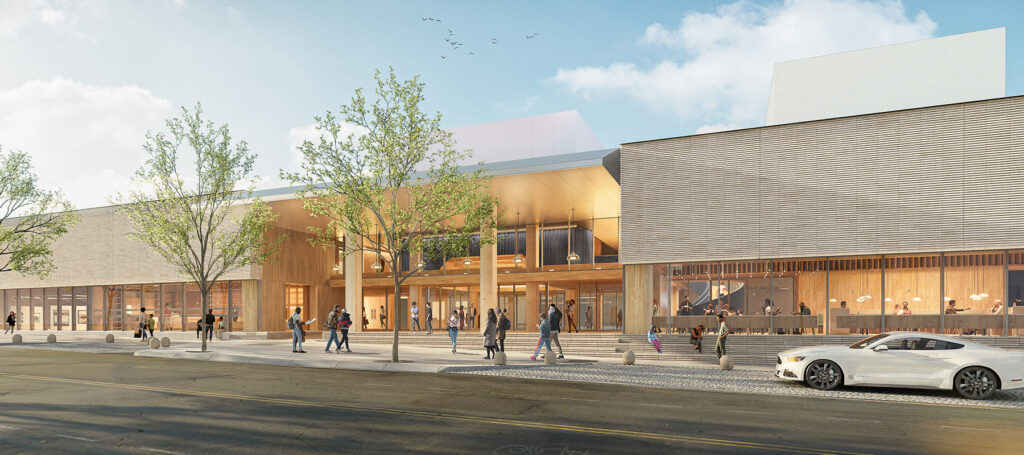
Images courtesy of Herzog & de Meuron
In six months, the footprint along Riverside Drive in Downtown Memphis will see a major transformation. Memphis Art Museum, located at Front and Union, will open with an expanded mission: to connect the Mississippi Riverfront to a light-filled museum and create a space that invites daily artistic interaction. “Connection” may become the defining word for the new Brooks, linking the river to the street, pedestrians to art, and the city itself to new creative possibilities.
“The museum’s move downtown represents more than a new location,” said Alexandra Schrack, Memphis Art Museum community and corporate relations officer. “It reflects the energy, commitment, and shared vision of countless people, including our Pride Collective, whose engagement has helped make this moment possible for Memphis.” The new museum is projected to increase annual attendance from 125,000 visitors at the original Brooks to approximately 360,000.
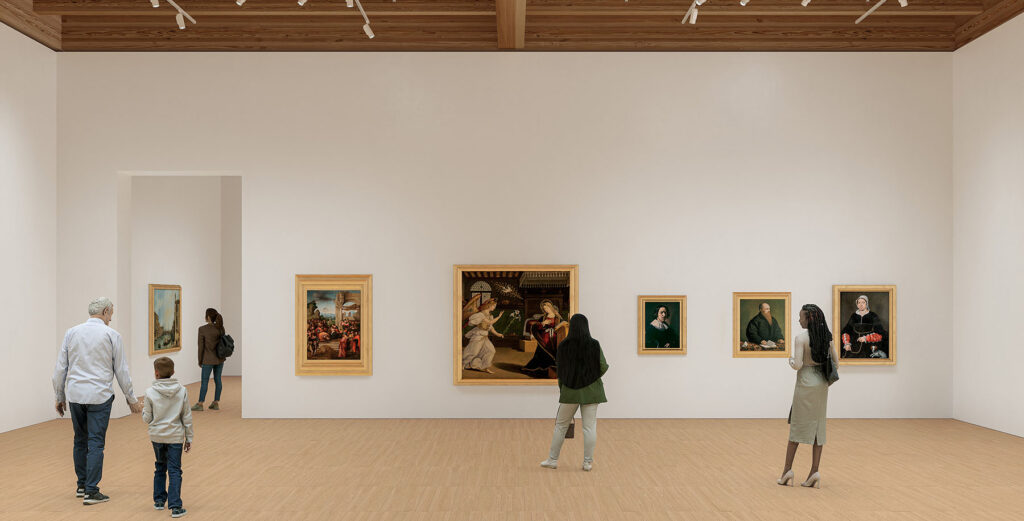
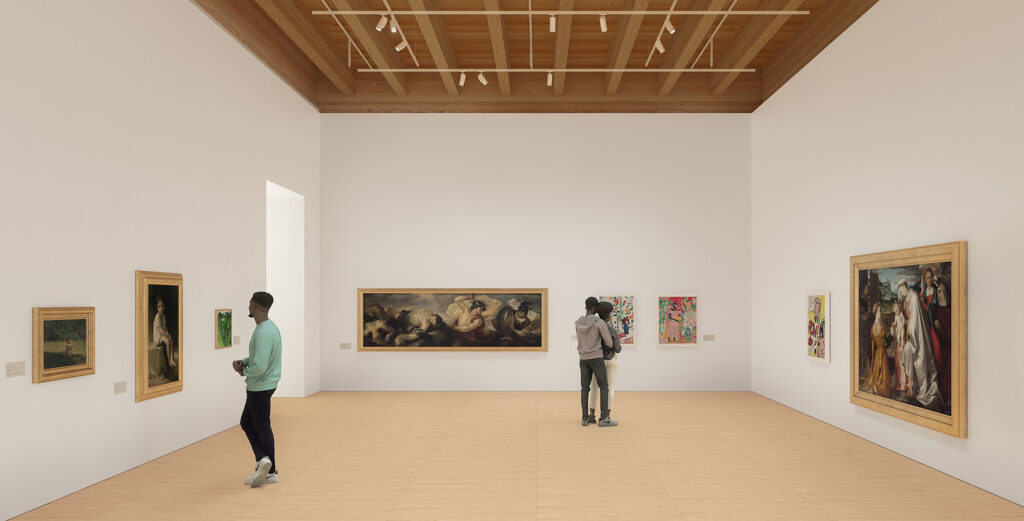
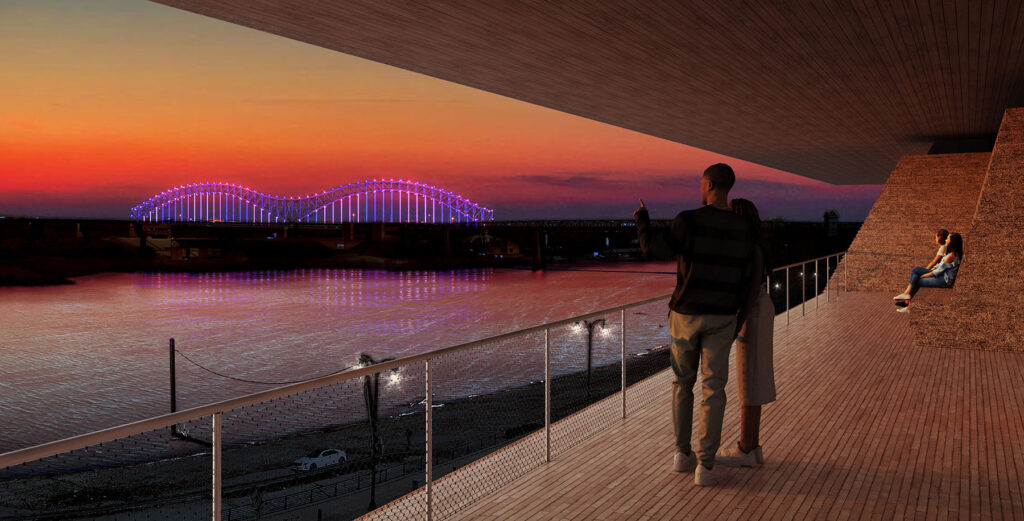
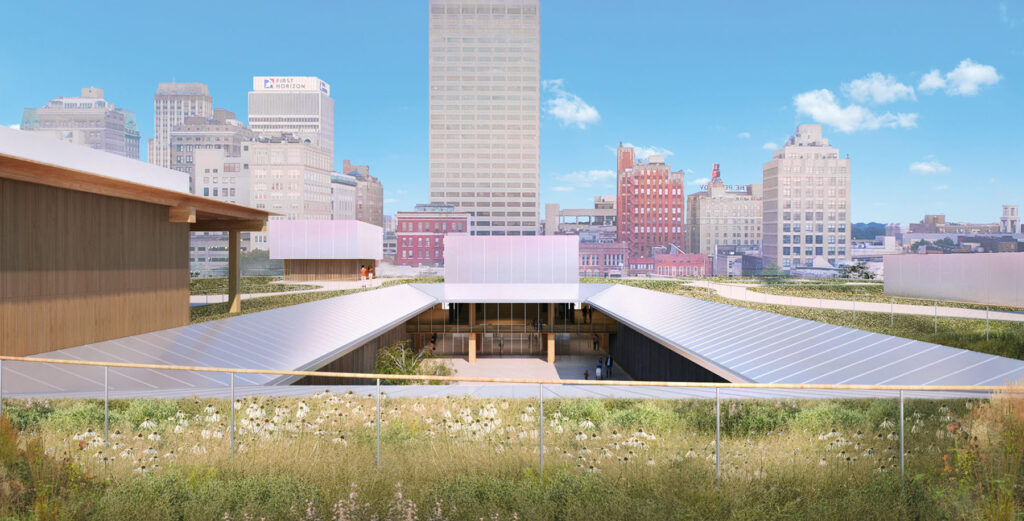
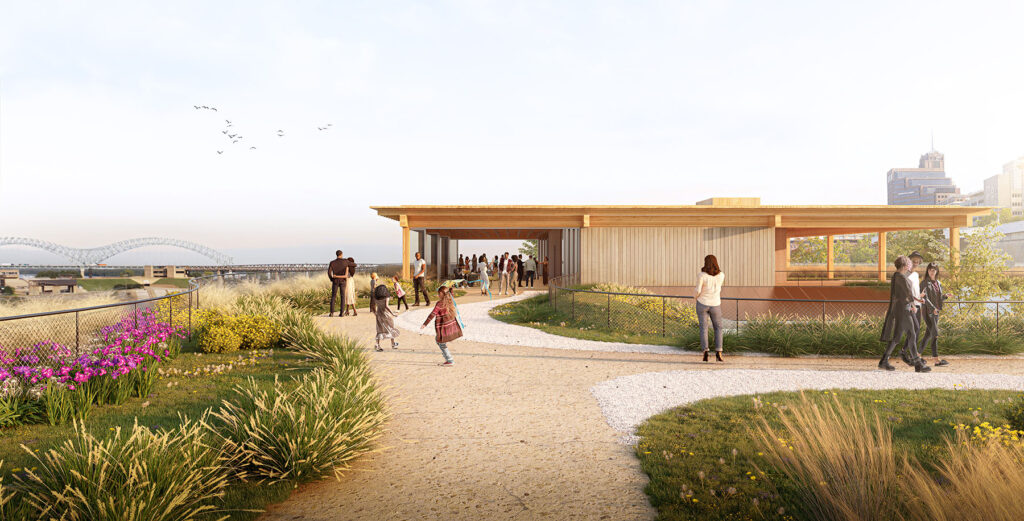
By December 2026, the museum will complete its move from the Memphis Brooks Museum of Art to its new home on the Mississippi riverfront. The new facility will span 123,500 square feet, offering 50 percent more gallery space and six times more free public areas. Features include a 10,000-square-foot community courtyard, a 50,000-square-foot rooftop sculpture garden, an outdoor amphitheater overlooking the Mississippi, a shared pedestrian walkway with Cossitt Library, a café, underground parking, and a theater.
The original Brooks Museum opened in Overton Park in 1916, funded by a $100,000 gift from Bessie Vance Brooks. Modeled after the JP Morgan Library, the Beaux Arts building became the oldest and largest art museum in Tennessee, housing more than 10,000 works spanning from ancient to contemporary art. Planning for a new museum began in the late 2010s, driven by the need for repairs, expanded gallery space, and a broader vision to reconnect downtown Memphis with the Mississippi River. Relocating the museum closer to major destinations like Beale Street and FedExForum also increases visibility and accessibility, encouraging daily use.
In 2018, the downtown riverfront site, previously occupied by a fire station and parking lot, became available. The City of Memphis committed $30 million to construction. The museum’s capital campaign has raised $135 million toward its $180 million goal, with contributions including $40 million from the Hyde Family Foundation, $12.5 million from the State of Tennessee, and nearly $7 million from the AutoZone Foundation. Economic studies estimate the museum could contribute between $26 million and $94 million annually to the local economy.
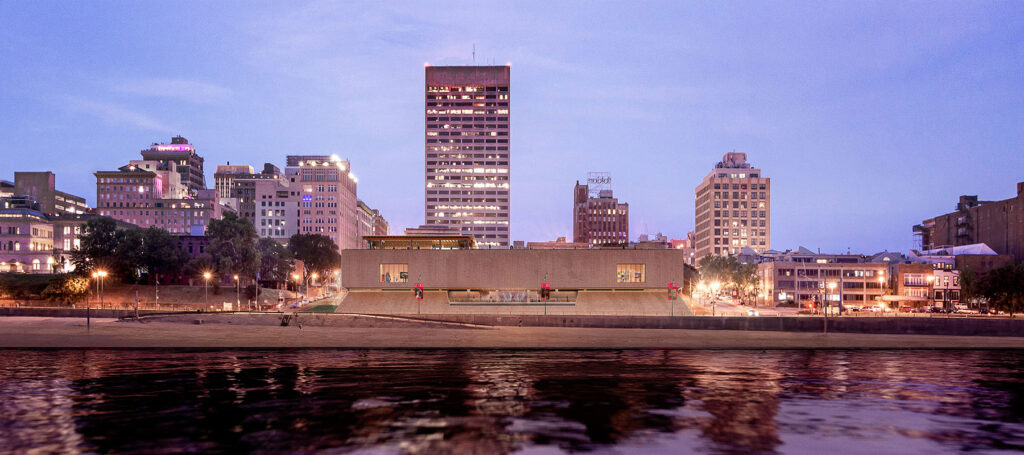
Following an international search, the project team selected Herzog & de Meuron, with archimania as architect of record and landscape studio OLIN. The design emphasizes a deep connection to place through materials, culture, and spatial experience. The building features warm, earthen tones inspired by the river’s clay banks and incorporates laminated timber, honoring Memphis’ history as a hardwood capital. The structure is designed to open the city toward the Mississippi.
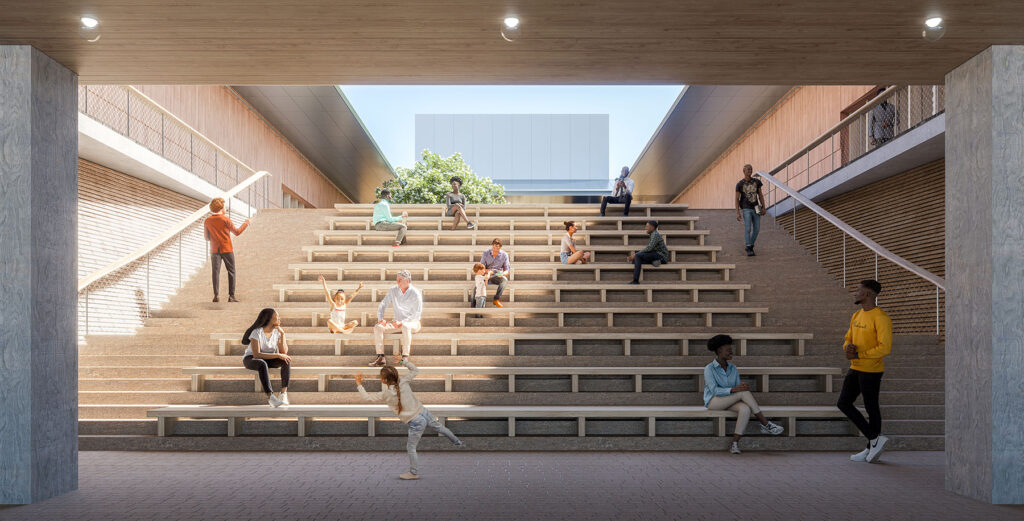
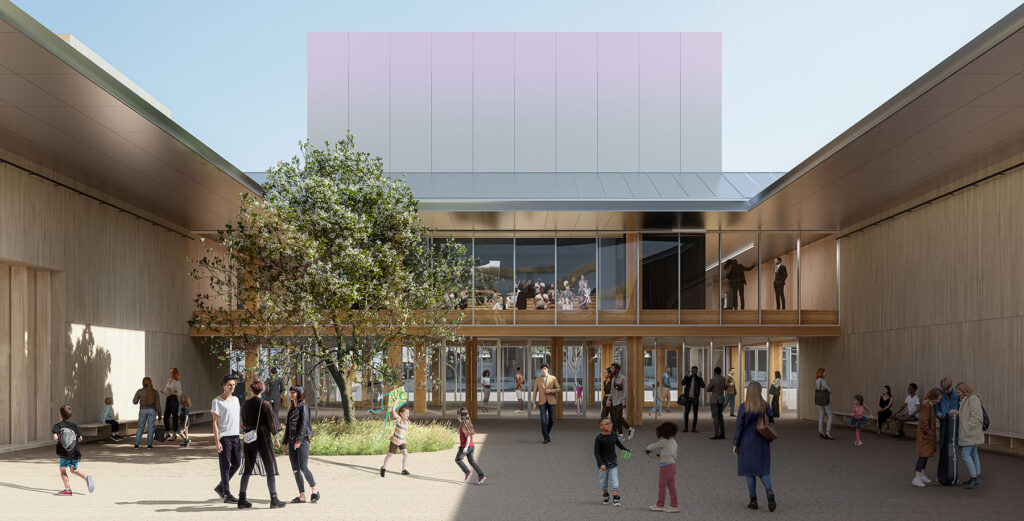
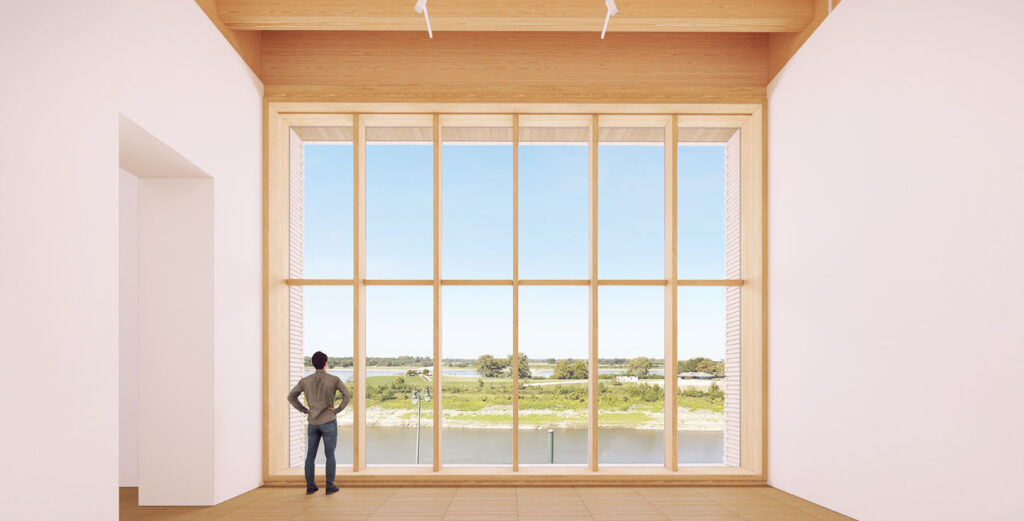
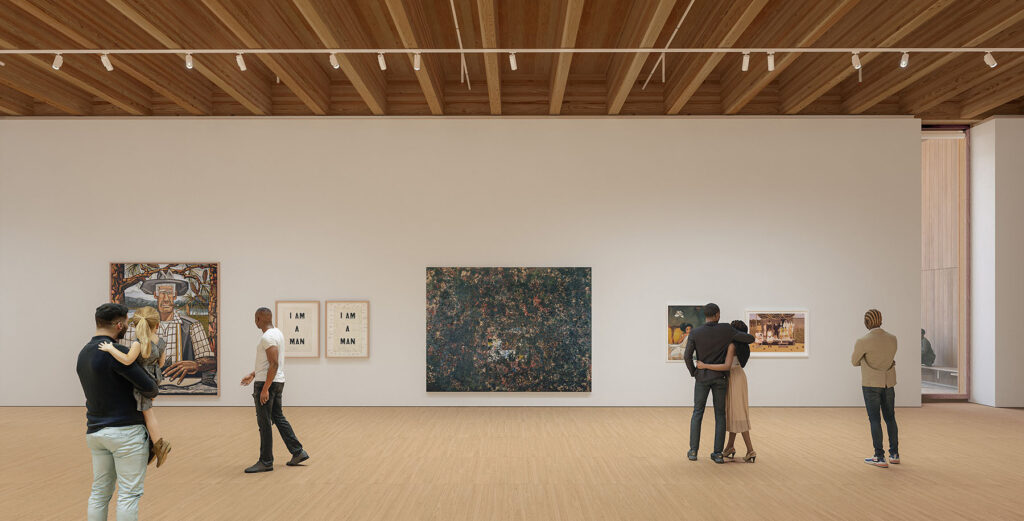
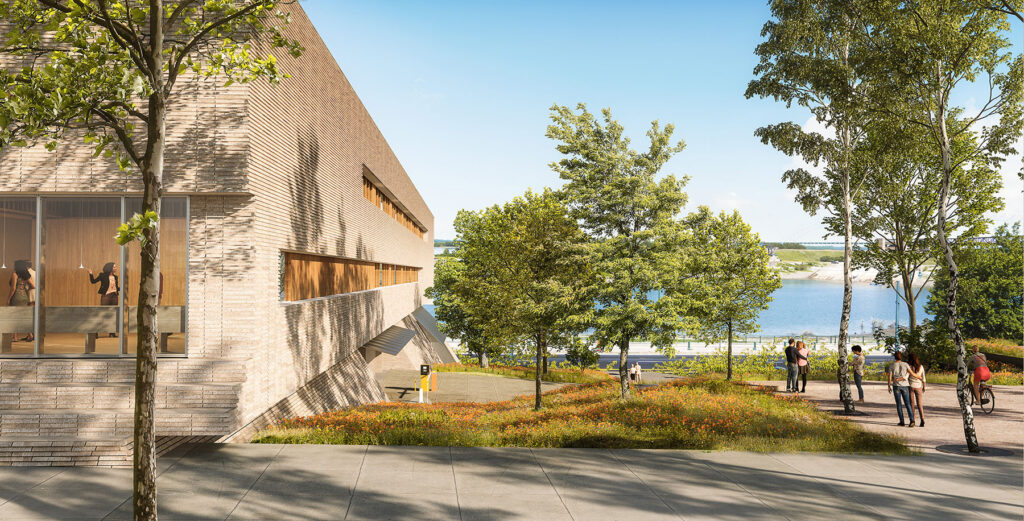
Memphis exists because of the bluff. When the city was founded in 1819, planners designated the bluff as a public promenade, recognizing its elevation above the floodplain. That vision remained largely unrealized for two centuries. The new Memphis Art Museum aims to complete it by extending the city grid to the river, expanding public access, and helping realize the long-imagined Bluff Walk. Materials reinforce this intent, with brick exteriors reflecting riverbank tones and a mass timber structure sourced from southern yellow pine in nearby Dothan, Alabama.
After updated renderings were released in January 2026, Ascan Mergenthaler, senior partner at Herzog & de Meuron, noted the rapid progress. He highlighted the timber-beamed galleries, the welcoming Front Street entrance, the expansive courtyard, and the rooftop terrace overlooking the floodplain as key elements already taking shape, emphasizing the building’s civic impact.
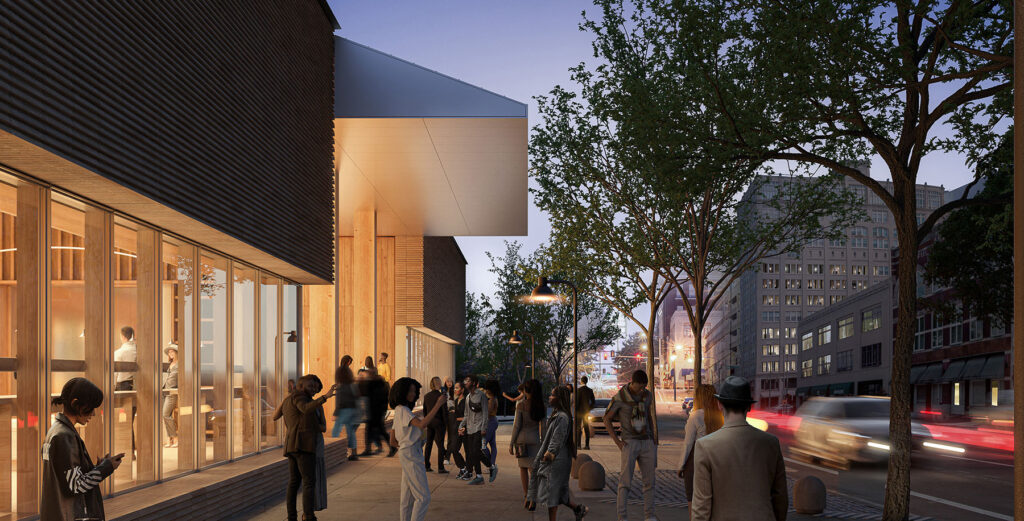
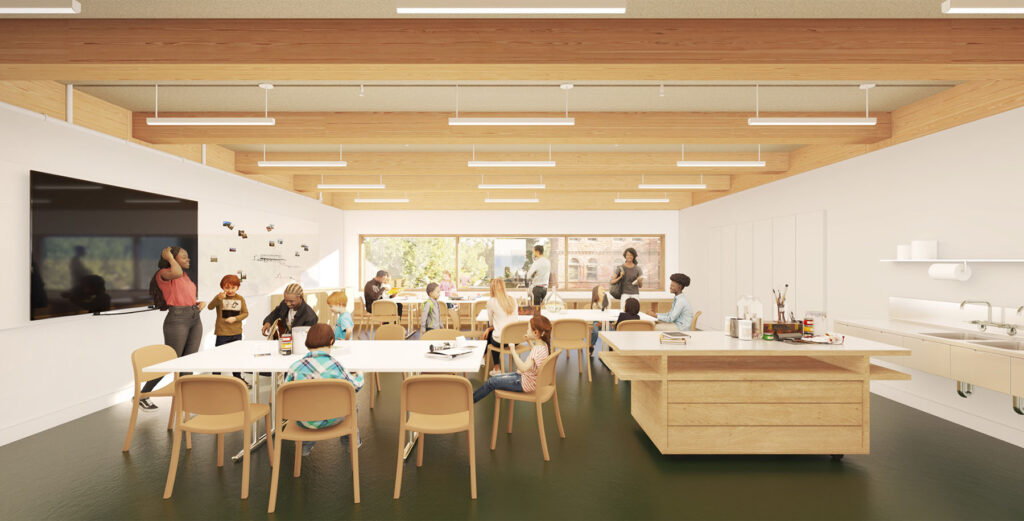
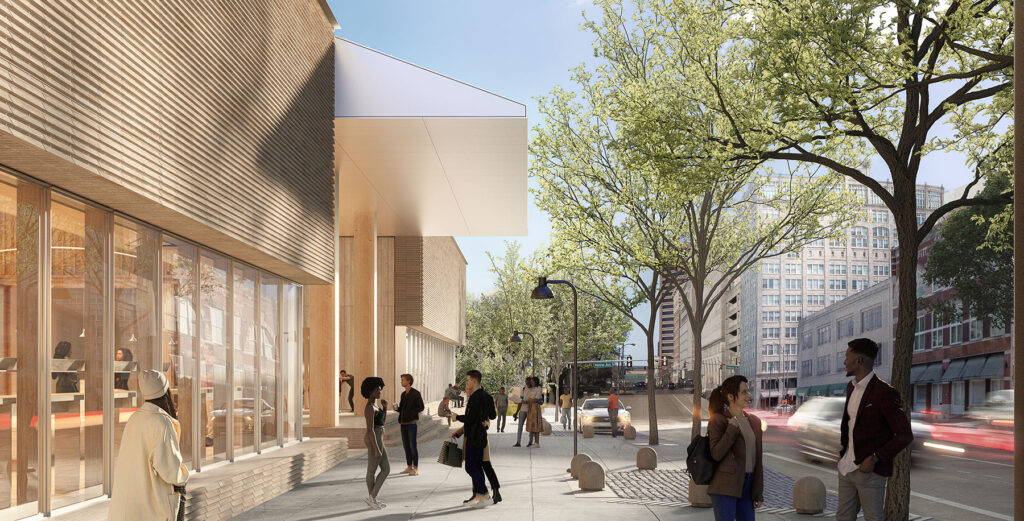
Designed to engage the community, the museum includes a transparent, street-level gallery that allows passersby to see art from Front Street. A public plaza shared with Cossitt Library creates a communal space along the bluff. The building’s layout centers on an open courtyard, with galleries and classrooms forming a continuous loop and offering views of the Mississippi from every level. The rooftop garden will feature sculptures, a walking path, native plantings, and an event pavilion.
The sculpture garden places visitors above the floodplain, offering views largely unchanged for two centuries, with the Arkansas bank remaining undeveloped. A transparent façade allows the city to see into the museum, while the shared plaza creates one of the few ADA-accessible routes to the river.
The museum’s collection will expand alongside the new space. Recent acquisitions include 80 works by contemporary Black artists through the Blackmon Perry Initiative, supported by an endowment that funds exhibitions, acquisitions, and a dedicated curator role. Another major addition is the Hooks Brothers Studio archive, more than 75,000 photographs documenting Black life in the American South from 1900 to 1984.
Memphis artists will remain central to the museum’s mission. Through the Art Now Collective and ongoing exhibitions like the Art Garden series, local artists are elevated and connected with broader audiences. The museum store will feature locally made goods, while a new open studio space will allow visitors to move directly from viewing art to creating it, with teaching artists available daily.
As opening plans take shape, the museum will organize its galleries into 18 thematic exhibitions that connect across time, geography, and medium. Chief curator Dr. Patricia Lee Daigle emphasized the opportunity to present works in new dialogue, placing Memphis artists alongside pieces from antiquity, sometimes within the same space.
Images courtesy of Herzog & de Meuron
The museum also continues its commitment to LGBTQIA+ engagement through groups like the Pride Collective, along with inclusive programming, partnerships, and acquisitions.
With expanded free public areas and a design that encourages all-day use, the new Memphis Art Museum represents a shift in both space and philosophy. All galleries will sit on a single, non-hierarchical floor, ensuring no art form is prioritized over another. The result is not simply more room for art, but a reimagining of how art is experienced.
As Dr. Daigle noted, the new museum is not just about discovery. It is a rediscovery of what art can be.

