
Forget Fashion Week. Forget Shark Week. The thickest competition of the season is happening right now, and these bears have been bulking all summer.
Fat Bear Week 2026 is underway at Katmai National Park and Preserve in Alaska, where some of the largest brown bears on Earth are competing in an online, bracket-style tournament. From September 22 through 29, people around the world can look at before-and-after photos and vote for the bear they think best represents fatness and success.
And yes, Focus readers, we realize there is another community that knows a thing or two about bears.
First, the actual bears
Fat Bear Week isn’t really a beauty contest, although the Internet certainly treats it like one.
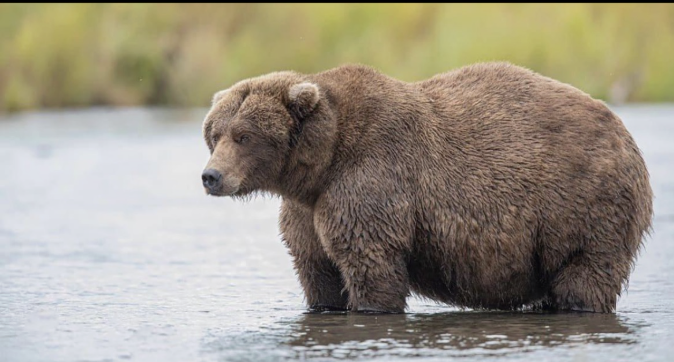
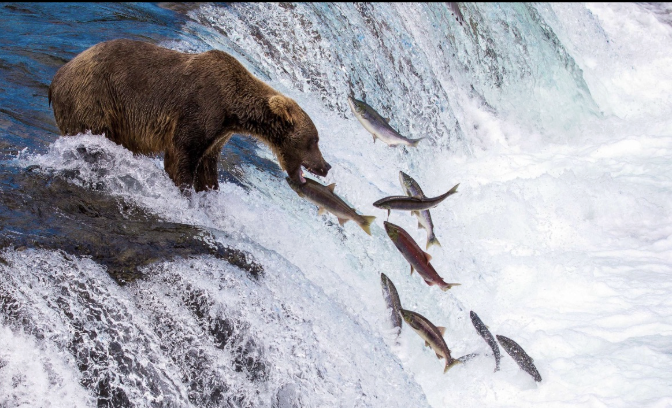
For Katmai’s brown bears, getting fat is serious business. The bears spend the summer and early fall eating, particularly the abundant salmon found in the Brooks River, to build enough fat reserves to survive winter hibernation. During hibernation they don’t eat or drink and can lose about one-third of their body weight. In other words, in this particular competition, fat isn’t an insult. Fat means survival and success.
The contest started in 2014 and has turned into an international event. More than 1.7 million votes were cast from more than 100 countries last year, when Bear 32, better known as Chunk, took the 2025 crown. Chunk is back in the 2026 bracket to defend his title.
This year’s tournament features 16 bears, and voting is happening now. The competition continues through September 29, when one very well-fed contestant will become the Fat Bear Week champion.
Wait. Did somebody say bears?
Now we arrive at the part that made us at Focus chuckle.
The LGBTQ+ community has spent decades developing its own colorful vocabulary for describing ourselves and one another. Somewhere along the way, the animal kingdom got involved.
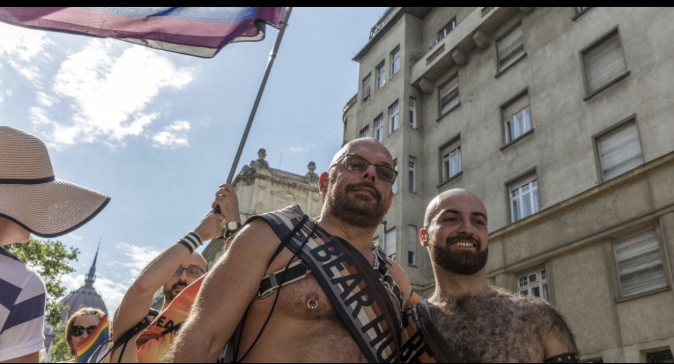
In gay culture, a “bear” generally refers to a larger, often hairy gay, bisexual or queer man, although there isn’t an official checklist. Bear culture grew into a community of its own, complete with bear clubs, gatherings, bars and events.
Which means that for one glorious week in September, the National Park Service and queer culture are essentially asking the same question:
Which bear are you rooting for?
Of course, Katmai’s bears have salmon, hibernation and several hundred pounds on the human variety. But once you notice the linguistic overlap, it is difficult to stop.
Queer communities have long played with language as a way to describe attraction, appearance, age, style and identity. Some terms became identities people proudly claim. Others are mostly playful shorthand. Meanings can vary by generation, city and social circle, and nobody is required to squeeze themselves into one of these boxes.
But since we’re already talking bears, here’s a quick field guide.
Focus’ Completely Unscientific Queer Wildlife Guide
Bear: Generally a bigger and often hairy gay, bi or queer man. Bear culture has developed a substantial community and identity of its own.
Cub: Usually a younger man who identifies with bear culture. Think bear energy, earlier chapter.
Otter: Typically a slimmer or leaner hairy man. Same general forest. Different build.
Wolf: A less precisely defined term sometimes used for a lean, muscular or athletic hairy man. Definitions vary considerably depending on who is using it.
Twink: Usually a young or youthful-looking, slim man with relatively little body hair. One of the most widely recognized terms in gay slang.
Twunk: The linguistic offspring of “twink” and “hunk.” Generally used for someone with a youthful or twink-like appearance but a more muscular build.
Daddy: Less about an exact body type and more about age, maturity, appearance or energy. A daddy doesn’t necessarily have children, obviously.
Silver fox: An attractive older person, particularly someone embracing gray or silver hair. Unlike some of the other terms, this one isn’t exclusively queer.
And that is hardly the complete glossary.
There are plenty of other labels floating around queer culture, and the definitions are anything but scientific. They overlap, change and sometimes depend entirely on who is doing the talking.
That’s also part of the fun.
Language has always helped LGBTQ+ people find one another. Sometimes it creates community. Sometimes it communicates attraction. Sometimes it lets us describe ourselves in ways the larger culture never provided.
And sometimes it’s just funny.
Back to Alaska
There is something unexpectedly charming about Fat Bear Week beyond the jokes.
At Katmai, a fat bear is a successful bear. The competition draws attention to the relationship among the bears, salmon and the larger Bristol Bay ecosystem. The bears’ dramatic transformations are possible because they have access to the food and habitat necessary to prepare for winter.
So while we may have borrowed “bear” for an entirely different ecosystem, both uses have eventually developed into celebrations of bodies that don’t necessarily fit somebody else’s idea of what the ideal body should look like.
That’s probably as deep as we need to make this.
Because there are bears to judge.
Fat ones.
And this week, that’s a compliment.

