


As the Dixon celebrates 18 years of showcasing Memphis artists, a curator and local artist explain why creativity is also a business and what it takes to build a sustainable career.
A painting hanging in a gallery represents more than creativity. Behind it are hours of work, expensive materials, professional relationships, and often years spent building a career. For many artists, making the work is only part of the job. Making a living from it is another challenge entirely.
At the Dixon Gallery and Gardens, a major retrospective is putting that work into perspective.
“Mallory/Wurtzburger: 80 Exhibitions, 18 Years” brings together works by 60 Mid-South artists, celebrating nearly two decades of exhibitions that have helped connect local talent with collectors, galleries, and new audiences.
On view through January 3, 2027, the exhibition is also a reminder that Memphis artists are part of the city’s business community. Their work generates income, supports families, creates professional opportunities, and contributes to the local economy.
For the Dixon, supporting these artists has been a commitment since 2008.
More Than a Place to Exhibit
The Mallory and Wurtzburger Galleries series began under Dixon director Kevin Sharp as a dedicated space for local and regional artists. Since then, it has presented 80 exhibitions featuring more than 100 artists at different stages of their careers.
Some were established professionals. Others were recent graduates, educators, or people returning to art after working in other fields.
Ellen Daugherty, associate curator at the Dixon, says the program offers something that can be difficult for artists to obtain: the professional recognition of a museum exhibition.
A Dixon exhibition includes curatorial research, professionally designed promotional materials, museum publicity, and a permanent listing in the institution’s exhibition archive. Artists also have opportunities to meet visitors and discuss their work through public programs.
Those resources can have a lasting effect on an artist’s career.
A solo museum exhibition may strengthen a grant or residency application, support an academic’s pursuit of tenure, or introduce an emerging artist to a gallery interested in representing their work.
Daugherty points to Jennifer Watson, who gained representation from Goetze Art & Design after exhibiting at the Dixon. Artist Martha Kelly has described her Mallory/Wurtzburger exhibition as a turning point in her career.
Kaylyn Webster, whose Dixon exhibition followed her graduation from Washington University in St. Louis, went on to exhibit in Brooklyn and receive residencies at the Children’s Museum of Memphis and Crosstown Arts.
For artists, visibility can become opportunity. But opportunity does not always mean immediate income.
The Hidden Costs of Being an Artist
Memphis artist and educator Joshua Brinlee understands that distinction.
His practice combines photography, digital collage, and self-portraiture, exploring identity, masculinity, memory, and the experience of growing up gay in the South.
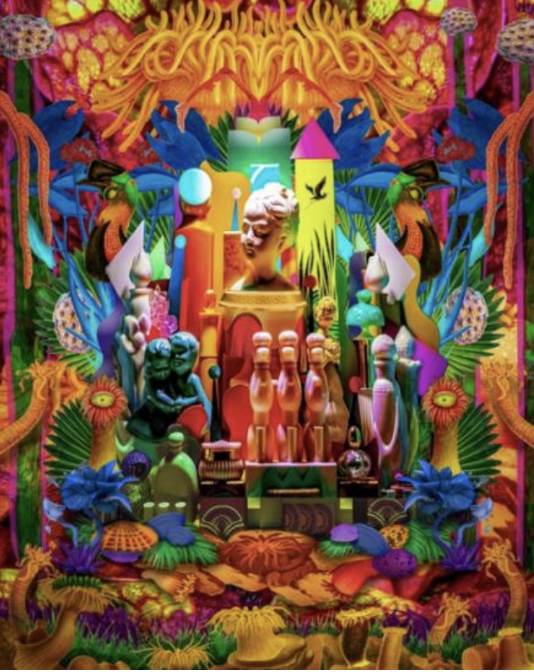
Digital Collage/Archival Pigment Print
2026
Brinlee has lived in Memphis since 1997 and attended Memphis College of Art. The city’s contradictions, its beauty and roughness, traditions and changes, continue to influence his work.
His recent projects incorporate objects inherited from his grandmother, including Avon bottles and other collectibles. What might appear to someone else as clutter becomes a way to explore memory, family, and the things people choose to preserve.
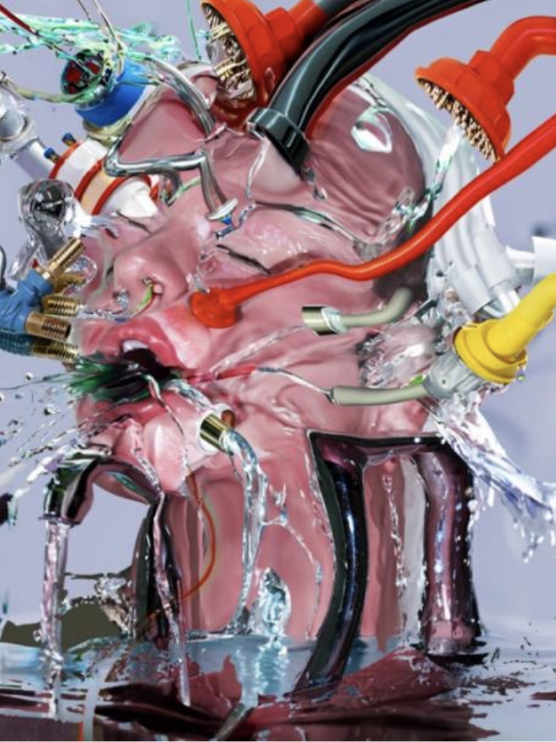
Digital Collage/Archival Pigment Print
2025
His work in the Dixon exhibition brings that perspective into a larger conversation about Memphis art.
But Brinlee also wants audiences to understand the practical realities behind a creative career.
“I wish more people understood how much of being an artist happens outside the studio,” he says.
Application fees, shipping, framing, travel, photography, websites, and promotion are all part of the business. Artists also spend considerable unpaid time pursuing opportunities that may never result in a sale.
“Exhibitions do not always lead to sales, and even promising opportunities can be costly to pursue,” Brinlee explains.
Like many working artists, he recognizes that creative careers often involve balancing studio practice with teaching, freelance projects, or other employment.
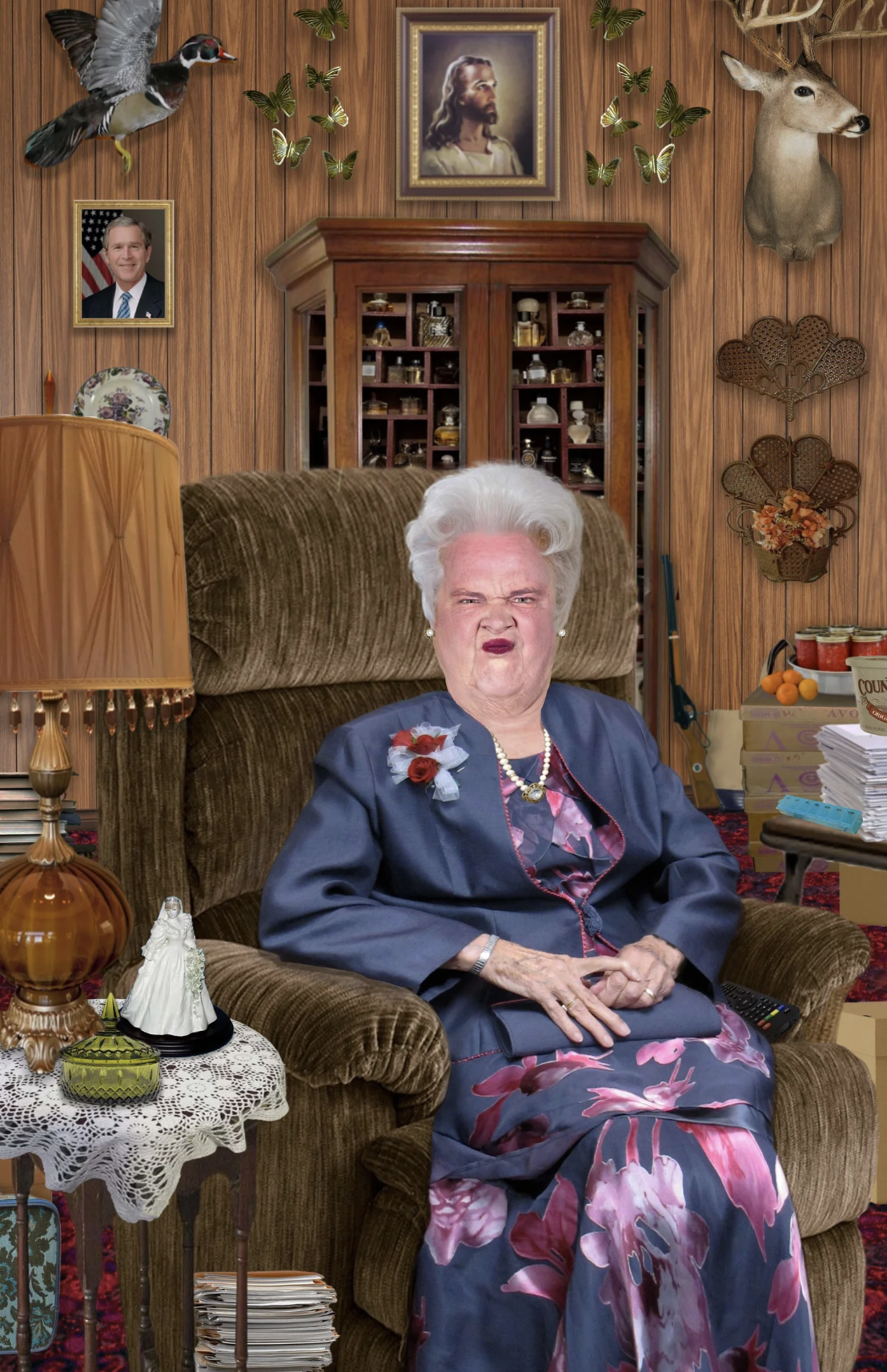
Digital Collage/Archival Pigment Print
2021
The public sees the finished artwork. What it rarely sees is the time, labor, and financial risk required to produce it.
Why Art Costs What It Does
Daugherty says one of the biggest challenges artists face is helping potential buyers understand the value of original artwork.
People sometimes assume smaller pieces should be inexpensive or that abstract art requires less work than realistic painting. Those assumptions overlook the artist’s experience, creative process, materials, and professional expenses.
As costs rise, even breaking even on a piece can become difficult.
“When you buy art at a fair value you are paying a professional for their work,” Daugherty says.
She points to the phrase “Art is Work,” used by national arts organizations to emphasize that creativity involves labor deserving of compensation.
For Memphis residents, purchasing from a local artist has an economic benefit beyond the artwork itself.
The money becomes income for someone living and working in the community. It can help cover household expenses, purchase supplies, and support the artist’s next project.
The Dixon does not directly sell artwork in its Mallory/Wurtzburger exhibitions, but it connects interested buyers with artists, who may sell their work while it is on display.
The museum also invites participating artists to its annual Hot Off the Wall fundraiser, where artists receive half of each sale and the remaining proceeds support Dixon education programs.
Daugherty recalls artist Sowgand Sheikholeslami selling a painting almost immediately during this year’s event, followed by inquiries from other interested buyers.
For an artist, those relationships can be just as valuable as the initial sale.
Investing in Memphis Creativity
The relationship between museums, galleries, collectors, and artists is an important part of Memphis’ creative economy.
Museums provide recognition and exposure. Galleries help connect artists with buyers. Collectors and businesses provide financial support. Artists continue creating the work that gives those institutions and spaces their purpose.
Brinlee believes that support needs to go beyond compliments and attendance.
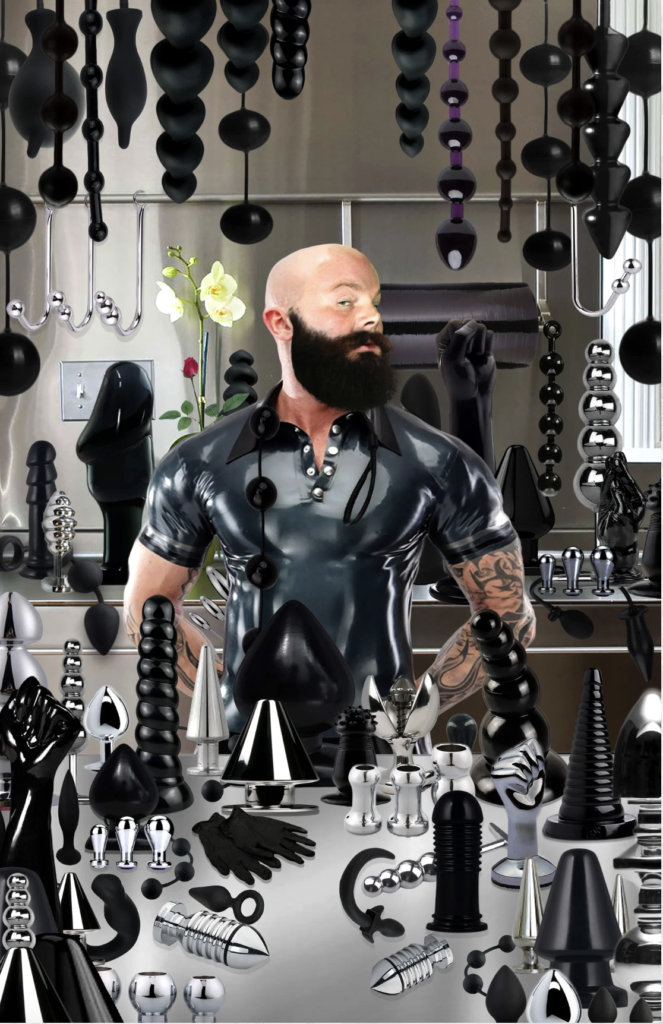
Digital Collage/Archival Pigment Print
2021
“That might mean buying local work, attending exhibitions, commissioning artists, or creating paid opportunities rather than always asking artists to donate their time or work,” he says.
He would also like to see more partnerships that connect artists with audiences and spaces where their work can be experienced.
For local businesses, that could mean commissioning an original piece, purchasing artwork for an office, or working with a Memphis artist on a creative project.
Daugherty encourages restaurants, offices, and other businesses to think locally when decorating their spaces rather than relying on mass-produced artwork.
There are already many opportunities to discover and purchase original art throughout Memphis, including RiverArtsFest, local art walks, gallery exhibitions, and seasonal art markets.
Supporting artists, she says, is another way to invest in the community’s economy.
Making Space for Different Voices
The Dixon’s retrospective also reflects the range of experiences and perspectives represented in Memphis’ arts community.
For Brinlee, whose work frequently examines queer identity and Southern culture, inclusion in the exhibition carries personal and professional meaning.
“I’m glad to have my work included in that setting and to bring my perspective, including the queer aspects of my practice, to the exhibition,” he says.
His work explores the relationship between how people understand themselves and how they are perceived by others.
That exploration extends into his latest projects, where personal objects and family memories become ways to consider belonging.
For LGBTQ+ artists and other historically underrepresented communities, Brinlee believes museums can help create meaningful opportunities for representation and connection.
But that commitment must extend beyond individual exhibitions.
“Representation matters, but so does making people feel they genuinely belong in the space,” he says.
Building those relationships requires institutions to listen to communities, make programs accessible, and continue creating opportunities for artists whose perspectives have not always been represented.
Building a Career That Lasts
As an educator, Brinlee encourages emerging artists to understand that successful creative careers rarely follow a straight path.
Making strong work is important, but so are persistence, flexibility, professional relationships, and the ability to adapt.
“A career in the arts does not follow a single path, and success can look different for each artist,” he says.
That perspective is reflected in the Dixon’s 18-year exhibition history.
Some participating artists have gone on to major gallery representation and residencies. Others have developed new audiences, returned to their creative practices, or found opportunities to sell their work.
Together, their experiences demonstrate that supporting local art is about more than celebrating individual talent. It is about creating an environment where artists have the resources and opportunities to continue working.
As the Dixon celebrates its 50th anniversary, the retrospective recognizes the artists who have helped shape Memphis’ creative identity.
And for visitors, it offers a simple invitation: discover an artist, learn about their work, and consider bringing a piece of Memphis creativity into your own life.
Because behind every work of art is someone doing the work of being an artist.
Visit the Exhibition
Mallory/Wurtzburger: 80 Exhibitions, 18 Years
Dixon Gallery and Gardens, Memphis, Tennessee
On view: October 4, 2026, through January 3, 2027
Meet the Artists reception: Thursday, November 19, 2026, 5:30 to 7:30 p.m.
Admission: Free
Learn more at dixon.org.

