


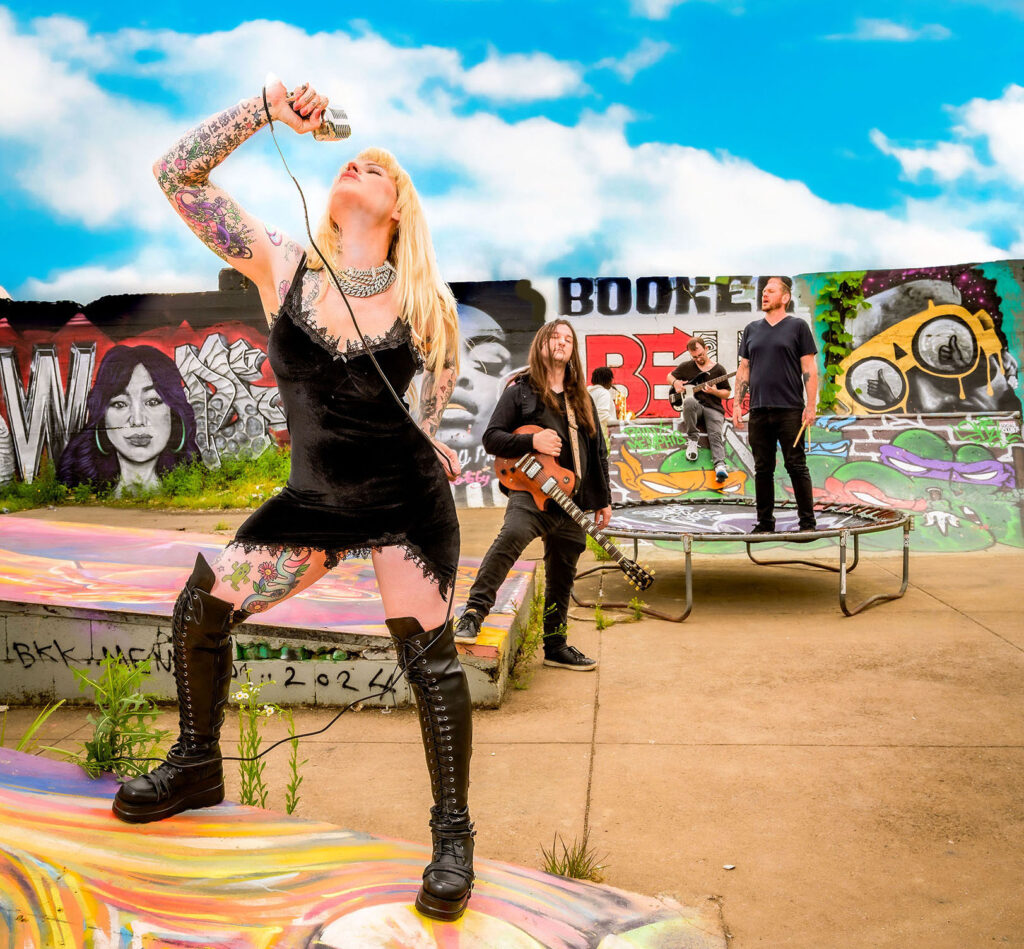
In the heart of Memphis, a city steeped in musical history, a new sound is emerging—one that intertwines the rawness of blues, the energy of rock ‘n’ roll, and the vibrancy of pop. At the forefront of this movement is Divergent, a band that not only challenges musical norms but also societal ones. Led by the dynamic Jad Davis, Divergent is more than just a band; it’s a statement, a community, and a bridge between past and present.
Origins: The Making of Divergent
Divergent is a fusion of four seasoned musicians from the Delta area:
Jad Davis: Lead vocalist and visionary, who began their music career pre-transition as Memphis’s first hyper pop artist in 2011.
Rob Coletta: Drummer, known for his deep roots in Memphis’s music scene.
Todd Baker aka Odd Todd: Guitarist with a flair for blending genres.
Stephen Baker aka DJ White Devil: Bassist, bringing depth and rhythm to the band’s sound.
Jad’s journey is as eclectic as their music. Before diving into the music scene, they worked in fashion from 2009 to 2012 as a production and operations manager with “Revolutionary Runway.” Their passion for creativity didn’t stop there; they also modeled, coached, and served as a creative director for various publications. In 2012, Jad collaborated with musicians to bring performances to children at Le Bonheur Children’s Hospital, even recording charity singles to support the cause. Their voice has resonated globally, with features on radio stations worldwide.
After receiving the Focus Magazine People’s Choice award in 2024, Jad felt a calling to form Divergent—a band that stands firm in a divided social climate.
Honoring Memphis’s LGBTQ+ Musical Legacy
Memphis has a storied history of LGBTQ+ performers, from drag legends to queer blues and soul pioneers. When asked about Divergent’s place in this legacy, Jad reflects:
“I think, first of all, it’s super important from where I stand to recognize that so many put in the work before I was even born. And that it is an honor to follow in the footsteps of some of these people. And I think that it’s about visibility and liberation, and I think that where we stand as a very mixed group, it really allows us to create a bridge between communities and remind everybody that we’re still one family that sits at the same dinner table.”
They also pay homage to trailblazers like Maggie Trissler and Jackie Shane:
“Maggie Trissler was one of the first ones to really kind of lead in a rock band and she went forward with herself in 2016. And that’s really cool. And in 1965, we had Jackie Shane, who was a black trans woman, not only surviving, but, like, actually thriving in a way that she made her life her own.”
Visibility in Today’s Climate
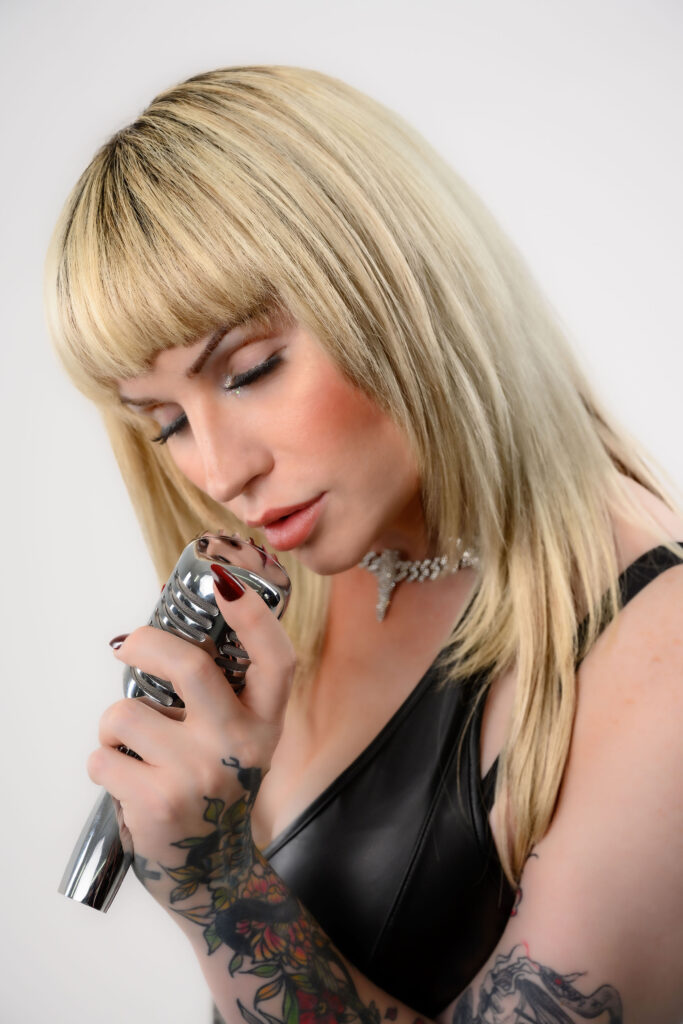
As a trans front person leading a band, Jad understands the weight of visibility:
“Personally, I think it’s super important for me to recognize how privileged and protected I am in my world. I come from a long line of support and love and protection. So I have been able to grow in a way that we all just long for in life. And so visibility for me is about making sure that people understand that I’m just human and I represent what we all kind of desire in terms of love and support.”
Artistically, Jad sees their role as a catalyst:
“Artistically, it’s my job to be as chaotic as I can, to create space and knock down walls so that they can also have their way, just as I was given prior.”
The Sound of Divergent
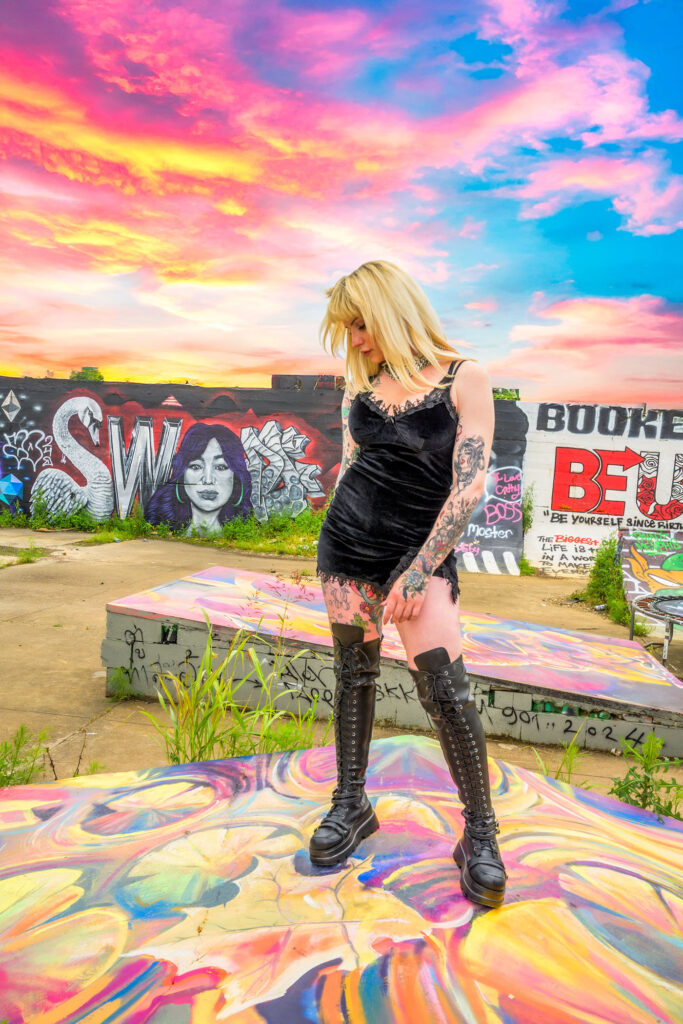
Divergent’s music is a reflection of its members’ diverse backgrounds and experiences. Jad describes their vocals as:
“Raw, unfiltered, honest vocals, and I think that it has that Southern grit and that blues pain and all those things. So it’s rock and roll.”
The band’s synergy is palpable, stemming from rigorous practice and deep mutual understanding.
“We are suckers for practice. We will practice anywhere from six to five days a week. We make sure that we have this ability to lock in. We do a lot of what in the gay community we call like subliminal speech. It’s so fun doing it with the guys because the guys are they’re actually decent at it.”
Music as a Healing Force
For Jad, music transcends mere performance; it’s a therapeutic outlet:
“Pain that music is, for many, a direct link to emotions. It does help me manage and facilitate my emotional expressions, which I’m otherwise terrible at sometimes, so I do get the opportunity and the privilege to learn from it in that way.”
They further elaborate on the spiritual connection:
“I kind of believe that we’re all made of frequency, and so it creates vibration, and singing is a way to connect to that. And it doesn’t matter whether you sound good or bad. What’s important is that you’re attuning yourself to our foundational existence, which is infrequency.”
Moments of Affirmation
In challenging times, Jad finds solace in “glimmers”—small, powerful moments that affirm their path:
“Just doing and following that organic path led to making Memphis history on May 12th. It was kind of shocking, I did not really expect that to happen, did not go into the opportunity, thinking that’s what would happen. It kind of happened, like, a week out from it when we came to understand that no, no trans person has been broadcast on, like, to television for anything outside of activism since 1965.”
This realization reinforced their mission:
“When me just showing up to be myself was considered a historical moment, there was this huge reflection that came with me about, this is why we do what we do, because what about those who came before me? Where were their flowers? I have to knock this down so that doesn’t happen again.”
Influences and Inspirations
Jad’s musical influences are as diverse as their experiences:
“I took a lot of social cues from artists and interviews and watching them. And so I learned that it really does come from a place of like authenticity. And artists like Maynard from Tool and Perfect Circle and artists like Antoni, from the 2000s, the Y2K, her vulnerability in a time in which we were not as accepted was super special.”
They also grew up listening to legends:
“I grew up with Patsy Cline, Queen, and Dolly Parton.”
Representation in the Music Scene
When discussing the representation of trans and non-binary artists in the music scene, Jad emphasizes humanity:
“I think the biggest thing is humanity. I think people need to remember that music has been a very strong liberator for our era, and that we always elect candidates for where we think those voices should be heard, and right now, the queer community is a big part of liberation for all.”
They see Divergent as a bridge:
“My queerness is very powerful where I operate in the world, and it makes me me, and that’s why people like me is because I’m just me. And so I think that’s what our community brings to the table, and I think that that’s why it’s important to remind everybody that Divergent is a bridge between that.”
Building a Supportive Community
Drummer Rob Coletta speaks about the band’s bond:
“We spend a lot of time together in a very personal way outside of the band element. We have Jad being basically a part of our family. We’ve been very close for more than enough years. We share family dinner once a week with my family and other extended family.”
Jad echoes this sentiment:
“This has been my best friend for so many years. I remember when I came to the city and wanted to get into music, Rob was the one that led me, and showed me where I could go to, like, become who I am today.”
Looking Ahead
Divergent’s journey is just beginning. Their debut single is set to release on all major streaming platforms, they’ve recently performed at Transfest, and you can see them at Pride in September. Jad shares:
“By the time you’re reading this, I think it’ll be really cool to note that you can find our single on all major streaming platforms, and probably at your nearest college radio station.”
They’re also planning to give back to the community:
“Divergent will be committing a portion of merchandise sales.”
Instagram: @Divergent.sux
Facebook: “We are Divergent”
Available on all major platforms

