



by Cary Vaugn
TeKay is the kind of artist whose journey has taken him to almost every continent. His story speaks volumes about passion, resilience, and dedication. Over the years, he’s worn many hats—actor, singer, director, MC, board member, artistic director, executive producer, and cancer survivor, to name a few. His dedication to a cappella dates back to 1990, and decades of experience have shaped his artistic voice and deepened his connection to vocal performance. With two master’s degrees and a career that’s even taken him to the Broadway stage, TeKay has built a reputation as both a talented performer and a committed educator.

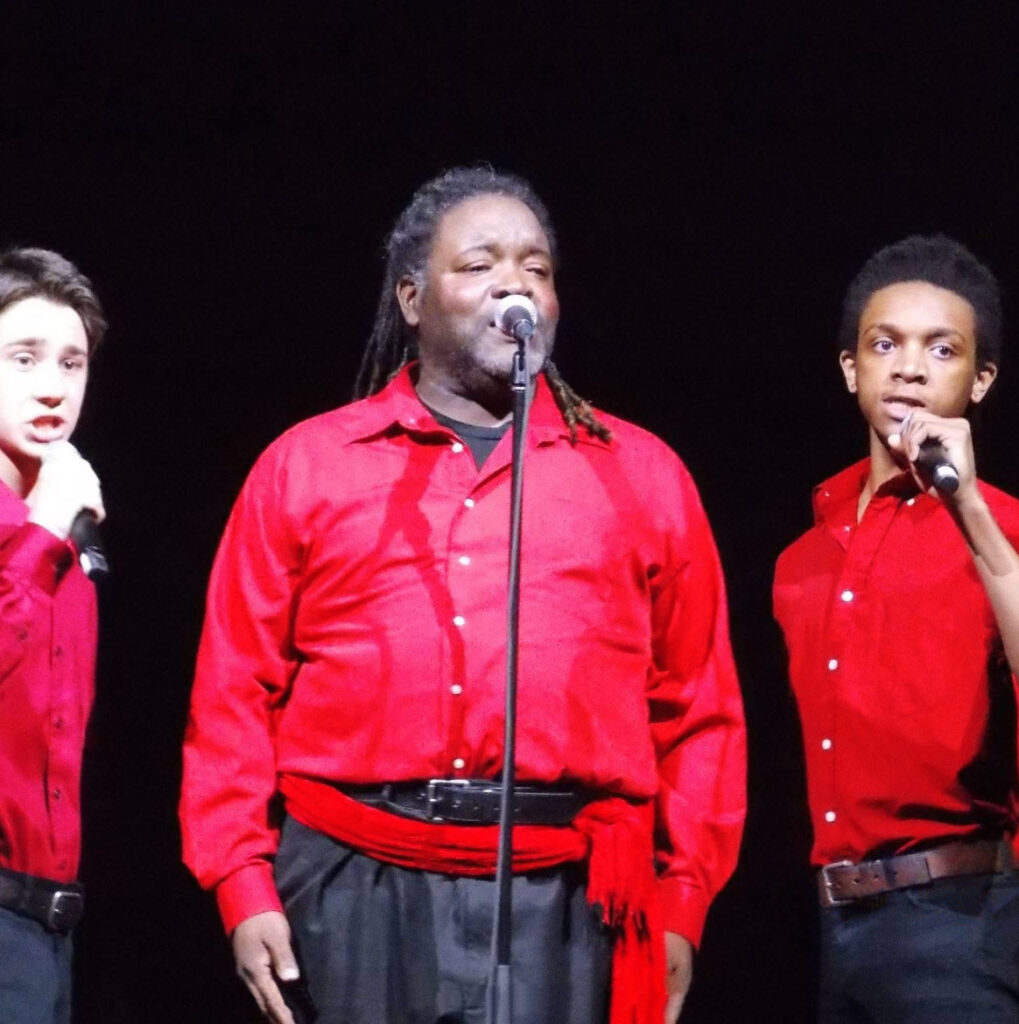
Now, as he steps into the role of director for Hattiloo Theatre’s production of Jubilee, TeKay is embracing a project that feels deeply personal. Jubilee tells the story of the Fisk Jubilee Singers, an African-American a cappella group founded in 1871 at Fisk University in Nashville, Tennessee. Originally formed to raise money for the university, the group popularized Negro spirituals in the mainstream—a powerful musical tradition rooted in the African-American experience. Their performances took them across the U.S. and Europe, earning international recognition and even an audience with Queen Victoria. Today, the Fisk Jubilee Singers continue to preserve and celebrate this remarkable legacy, receiving honors such as the National Medal of Arts.
For TeKay, directing Jubilee is more than just bringing a production to life. It’s an opportunity to highlight the power of music, history, and perseverance.
Jubilee really aligns with your history and experience. You’ve performed in two Broadway concerts and an Opera Memphis/DeltaCappla cast recording released in 2014 (A Midsummer Night’s Dream). But you’re also an arts educator. So on a scale of one to ten, how passionate are you about arts education?
I’m extremely passionate. I’m kind of a nerd for art—as well as a practitioner. I love learning about how acting started, or the history and theory of how music was first formed and how harmonies work. I was always into education in general. And my charge as a professor is to show students who may not be interested in theater how it benefits them, and how they can use it. At the end of the semester, one of the questions I ask is, “What did you take from this class?” Often, they thought theater was just about entertainment. But from a practical standpoint, the skills they learned as a stage manager can apply to becoming a project manager at a company. Or someone who builds a set could apply those skills to carpentry.
For those who want to continue their experience in the local theater community, what advice would you share?
It helps to know someone, because with that connection, they can take you to an audition or introduce you to the stage manager or someone who needs help with costumes. That’s what happened with a student of mine. He took my intro class and had a deep-rooted interest in theater but didn’t know where to start. I put him in a 10-minute play and a short scene for U of M. Bug bitten, he went to a Hattiloo audition, and now he’s on his way to becoming a superstar. They loved him. He’s fantastic—with very limited training.
See! That’s what amazes me. There’s so much untapped talent just walking around the Mid-South. Half the population probably doesn’t realize their potential—or maybe they do and are too scared of rejection or trying something new.
I think it’s access and opportunity more than anything else. Just because someone has access to something doesn’t mean they have the opportunity to do it. Some people who are tired of hearing “no” create their own theater troupes. It’s like, if you’re not offered a seat at the table, go make another table. Sometimes it works. Sometimes it doesn’t. As a director, it’s hard because it’s often easier to go with known talent. I may think, “I know this person can do it, but I wish I knew this other person better so I could work with them.” That’s when I try to find other projects that may not be as high-stakes, so I can build them up to the next level. It doesn’t always work, but sometimes it does.

So what would you tell someone who’s new to auditions—maybe they have little experience but they audition for a lead and end up cast in the ensemble. What do you say to someone who’s wondering, “I have the talent—why am I not the lead?”
I’d say something different as a layperson than I would as a teacher. Let me answer as a teacher first: “Take this as an opportunity to grow. Make it known to the director what you can do. The reason you didn’t get the lead may have nothing to do with your talent. It may be about how you fit into the show as a whole. Sometimes you just have to prove yourself.” As a director, we only see a fraction of what we can expect from a potential cast member in an audition. That makes it harder to extend a commitment to someone new or unfamiliar with the work ethic we’re looking for.
The Emerald Theatre Company produces a 10-minute play festival every year, and you always direct one of the selected plays.
I do. With Emerald Theatre, it’s a win-win for me. The festival gives me a chance to introduce people to a new theater company, and my students get the experience and résumé credit.
I’m really looking forward to Jubilee. Fisk has such a rich history. It started as the Fisk Free Colored School in 1866 for recently freed slaves and eventually became an accredited university by 1930. The Jubilee Singers were formed in 1871 by the school’s treasurer and music professor, George L. White, out of desperation to raise money during a time of low funding.
Because the Fisk Jubilee Singers have a 200-year history, the show can’t cover it all. It touches on stories from around 1871 to 1877—three tours across Europe and the U.S., that kind of thing.
I read that they were eventually exhausted from all the touring.
Yeah. Some of them even expatriated while they were in Europe.
Oh, I didn’t know that.
Yeah, because they knew what they were coming back to.

From what I know about the show, I hope audiences unfamiliar with the Fisk Jubilee Singers walk away understanding their massive cultural impact. They helped bring African American spirituals into the mainstream. I’ve read about their influence on jazz and the blues. What do you hope audiences walk away with?
I hope they walk away understanding the transformative power of music—especially the human voice. Except for one number, everything in the show is a cappella. Also, I want them to see the beauty in simplicity. Today, it’s hard to sing without extravagant runs and embellishments. That’s expected in modern gospel. But the Jubilee Singers were singing field hollers and spirituals. Straight-tone singing. Standard hymns that people recognize today.
A cappella has changed a lot since you started in the ’90s—with digital recording and performers mimicking percussion and electronic effects. How do you feel about how it’s evolved?
I love it. And I love it because I’ve been a part of that evolution.
Be sure to check out the regional premiere of Jubilee by Tazewell Thompson, presented
by Hattiloo Theatre,
from July 25 through August 24, 2025.
For details on Hattiloo Theatre’s 2025–2026 season and to order tickets, visit hattiloo.org.

