



By Ray Rico
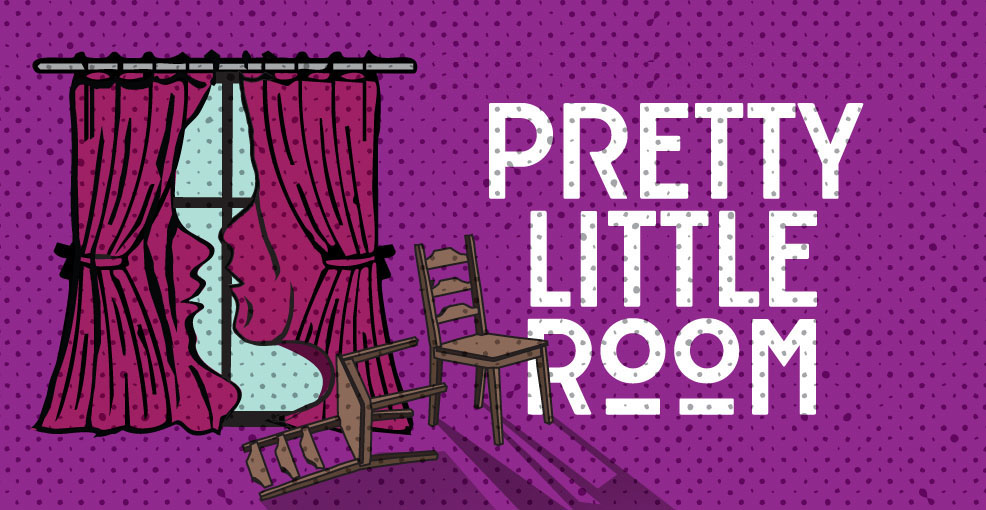
Opera often asks us to suspend disbelief and feel something true. With Pretty Little Room, Opera Memphis does something more radical: it asks Memphis to look directly at its own history, to confront a buried lesbian love story and the violence that silenced it, and to hear that story sung on its own soil for the first time. Premiering March 6–7, 2026 at Crosstown Theater inside Crosstown Concourse, this new opera brings the 1892 case of Alice Mitchell and Freda Ward into a 21st‑century arts space that was once a Sears warehouse. The result is a collision of past and present, tragedy and reclamation, institutional power and queer resistance.
At the heart of Pretty Little Room is a local story that once made national headlines. In 1892, Alice Mitchell and Freda Ward were teenagers in the Memphis area whose romance might, in another time, have remained a tender, private affair. Instead, their plan to run away together—Alice living as a man so they could marry—defied the rigid gender and sexual norms of their era. When their families discovered the relationship and tore them apart, the consequences turned deadly. Alice met Freda at the river landing and slit her throat, an act that the press quickly sensationalized. The subsequent trial focused less on the reality of their love and more on whether Alice was “insane,” turning queer desire into a medical problem to be diagnosed, managed, and locked away.
Composer Robert G. Patterson and librettist Jerre Dye take this history not as a courtroom drama, but as a psychological and emotional landscape. Rather than tracking legal proceedings, Pretty Little Room opens inside Western State Mental Hospital, the Bolivar asylum where Alice was confined after being judged “presently insane.” In the opera’s world, the asylum is both institution and metaphor: a place where walls and diagnoses keep women in line, but also where their memories and voices echo in ways the outside world refuses to hear. This is where we meet Alice as protagonist, no longer the newspaper monster of the 1890s but a young woman grappling with what she has done, what was done to her, and what has been taken from her.
The opera makes a crucial choice: Alice does not clearly remember the crime that defined her. Her memory is fractured and unreliable, and the audience experiences the story as she pieces it together. This approach allows Patterson and Dye to explore trauma and repression, but it also dramatizes how institutions—families, courts, asylums—rewrite queer lives. Around Alice, a chorus of women patients functions like a living Greek chorus. They watch, comment, mock, comfort, and sometimes haunt her, each with her own story of being deemed “mad” or “broken” in a system designed to punish deviation. Their presence widens the frame beyond one crime of passion into a broader indictment of how women’s bodies and minds have been policed.
Freda Ward is not merely a memory; she appears on stage as a vibrant, almost ghostly presence. Only Alice can see her, which gives their scenes the charged feeling of a haunting that may be supernatural, psychological, or both. Through Freda, the opera restores the romance that history distorted. She’s not just a victim on a slab or a name in a court record; she’s a person who laughed, dreamed, flirted, and made plans to build a life with another woman. In a city that often tells its history through the lens of the river, commerce, and civil rights, Pretty Little Room insists that queer love belongs inside that narrative too.
Patterson’s score supports this intimacy with a contemporary classical sound that favors clarity of text and emotional directness over grand-opera spectacle. Drawing on his long experience playing in opera pits, he writes for a chamber-sized ensemble—strings, piano, percussion, and harpsichord—with a keen ear for color and rhythm. The chorus of patients becomes one of his most potent instruments, rising and falling around Alice like waves of memory. Jerre Dye’s libretto, rooted in Southern language and imagery, moves between poetic interior monologue and sharply drawn confrontations with doctors and “experts” who dissect Alice’s psyche as if it were a specimen on a table.
Casting and direction deepen this focus on voice and agency. Perri Dichristina, as Alice Mitchell, carries the emotional weight of the piece. The role demands vulnerability, volatility, and a vocal line that can shift from lyrical longing to fractured, almost speech‑like utterances. Opposite her, Tina O’Malley’s Freda Ward offers warmth and presence, a reminder of the life and joy that have been violently interrupted. Their relationship anchors the opera; even as the narrative spirals through courtroom rhetoric and asylum routines, the audience keeps returning to the bond between these two young women.
Around them, a strong ensemble fleshes out the world that shaped and condemned their love. Marquita Richardson portrays Lucy, one of the patients whose own story intersects with Alice’s and who embodies the chorus’s shifting moods—from gallows humor to solidarity. Audrey Welsh appears as Teacher/Father, a dual role that underscores how authority figures, whether domestic or educational, work to enforce norms. Megan Esther Grey as Mother brings a mix of tenderness and fear, caught between love for her daughter and terror of public shame. Joel Clemens’s Doctor stands in for the medical establishment that pathologizes Alice’s feelings, while Julie Ervin, Shelbi Sellers, and Sarah Austin play the trio of Male Experts who translate desire into diagnosis and reinforce a patriarchal reading of events.
On the creative side, the production draws strength from a team that understands both contemporary opera and Memphis itself. Co‑stage directors Joy Brooke Fairfield and Ned Canty approach the piece with an eye toward psychological realism and visual metaphor. Fairfield’s background in socially engaged theatre meets Canty’s experience as general director of Opera Memphis, a company that has spent the last decade pushing opera out of the gilded box and into the city: parking lots, breweries, parks, and now the industrial‑chic architecture of Crosstown Concourse. Their staging choices—how the patients move as a collective, how Alice and Freda occupy shared or separate spaces, how the clinical world of the asylum intersects with the lyricism of memory—are key to making the story feel both period‑specific and urgently current.
Micah Gleason conducts, bridging Patterson’s score and the acoustic realities of Crosstown Theater. Unlike a traditional opera house with a deep pit and ornate balconies, Crosstown is a flexible, modern performance space carved out of a former distribution center. Its clean lines, exposed materials, and intimacy make it a compelling setting for a story about confinement and exposure. The audience sits in a building that once moved goods across the country, now repurposed to move ideas and art. That transformation mirrors the opera’s own act of repurposing: turning archived court transcripts and newspaper clippings into living voices.
Pretty Little Room also marks an important chapter in Opera Memphis’s evolution. Long known for staples like The Barber of Seville and its community-focused “30 Days of Opera,” the company has increasingly positioned itself as a laboratory for new American opera with local roots. Projects like I Hear America Singing, which set the lives of figures like Thomas Edison and Amelia Earhart to music, showed that the company could handle contemporary subject matter. But with Pretty Little Room, Opera Memphis is not reaching outward to national icons; it is looking inward, to a story that happened in its own backyard, involving young women whose identities and desires resonate powerfully with today’s LGBTQ+ Memphians.
The choice to premiere this opera now, in a city still wrestling with questions of justice, identity, and belonging, is not neutral. Memphis has a long history of being a crossroads—of music, of race, of religion, of migration. Adding queer history to that crossroads is overdue. By putting Alice and Freda at the center of a major new work, Opera Memphis acknowledges that queer lives are not a footnote to the city’s story but part of its foundation. The opera does not sanitize the violence at the core of the narrative, nor does it offer easy redemption. Instead, it creates space for empathy and complexity, allowing audiences to sit with the uncomfortable truth that love can exist alongside harm, and that systems meant to “protect” society have often destroyed the people they claim to save.
Crosstown Concourse itself amplifies this message. The building stands as a testament to reinvention: from a decaying Sears complex to a vertical urban village housing arts organizations, nonprofits, health clinics, and apartments. Watching Pretty Little Room there means watching a historic queer tragedy inside a monument to adaptive reuse. The walls remember a different kind of labor, one tied to commerce and industry. Tonight, they hold something else: song, testimony, and the possibility of communal reckoning.
As a Memphis writer and queer person, I see Pretty Little Room as more than a new title in Opera Memphis’s season. It is a form of historical repair. It invites us to ask why Alice and Freda’s story was for so long framed only as scandal and pathology. It challenges us to see how the language used to describe them in 1892 still echoes in the ways we talk about queer and trans people today. And it offers, through music and theater, a space where we can grieve, honor, and perhaps begin to rewrite the narrative.
Tonight, as the lights go down in Crosstown Theater and the first notes sound, I will be watching not just for vocal pyrotechnics or clever staging, but for how this opera lets Alice and Freda speak at last. After more than a century of being defined by courts, doctors, and headlines, they finally have the chance to tell their story themselves—through the bodies and voices of Memphis artists, in a city that is still learning how to listen.

