


by Vaniel Simmons
In its simplest form, advocacy means speaking up—whether for yourself or on behalf of others—to help meet essential needs or challenge unjust systems. For the LGBTQ+ community, advocacy is more than just action; it’s a legacy. Through generations of protest, organizing, and mutual care, queer and trans people have fought for their rights and continue to defend and expand them today. But what does advocacy really look like now? What does it mean to be an advocate in today’s world—especially as a young person navigating intersecting identities and systemic barriers?
To explore these questions, I spoke with two young leaders whose work is reshaping their communities from the inside out: Phoenix O. L. Powell and Andrea Olvera. Their stories offer rich insight into what advocacy looks like when it’s rooted in personal history, authenticity, and deep commitment to justice.

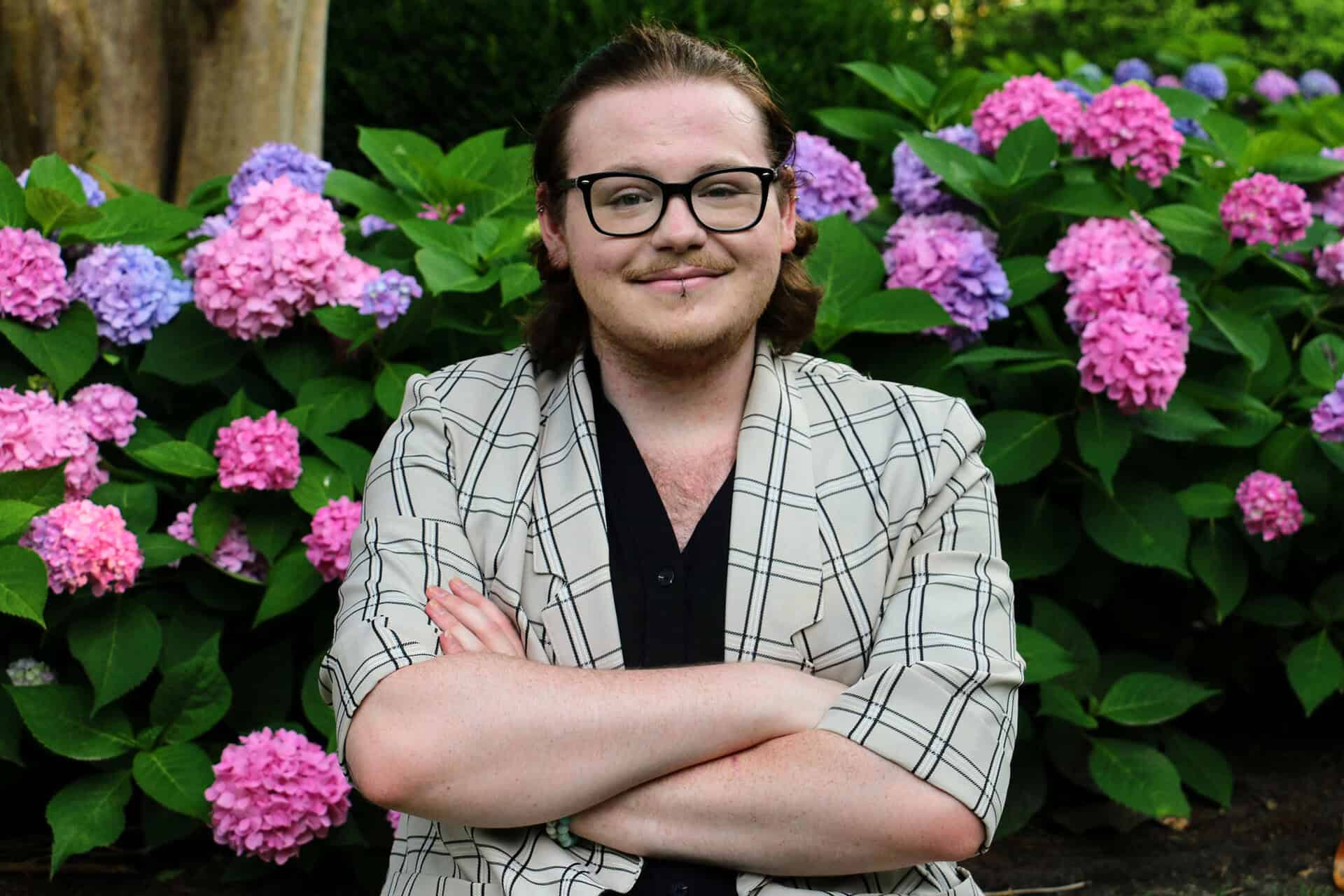
Phoenix O. L. Powell, a community advocate, contributes his advocacy work to the values instilled in him by his father. “If you can help someone, you should,” Phoenix recalls his father teaching him, “You can be the start for somebody.” This ethos stuck with Phoenix, forming the foundation of how he approaches his work. Rather than viewing advocacy as speaking over or on behalf of others, Phoenix defines it as the act of empowering people to take charge of their own lives. The goal isn’t to make decisions for others, but instead to coach people to make decisions for themselves, because each individual is an expert in their own lives. In practice, this might look like supporting someone in navigating health care or housing options. Phoenix describes helping people narrow down their choices to a few realistic options, then talking through the pros and cons of each. This process not only provides information, but affirms the individual’s power to choose what’s best for them—a radical stance in a society that often denies autonomy to marginalized people.
Phoenix’s advocacy is also deeply informed by his identity as a Black trans man. In Black spaces, he makes room for queer representation; in queer spaces, he insists on centering racial justice. As a Black trans man, he feels that he brings his transness to Black spaces where queerness may be less represented, and alternatively, he brings his Blackness to queer spaces. This intentional presence allows him to show up authentically while encouraging others to do the same. By embracing the fullness of his identity in each space he enters, Phoenix helps create environments where others feel safer doing the same.
Visibility, too, is part of his advocacy. After spending much of his life feeling disconnected from his identity, Phoenix now embraces being seen. “I’ve not done all of this work to be a trans man to not be seen,” he says. Simply existing as a confident, visible trans man in a world where trans people are so often erased, targeted, or misunderstood is a powerful form of resistance. And he’s no longer afraid to make others uncomfortable. In fact, he sees discomfort as necessary, as that push into uncomfortableness helps others to face their bigoted stereotypes and beliefs.
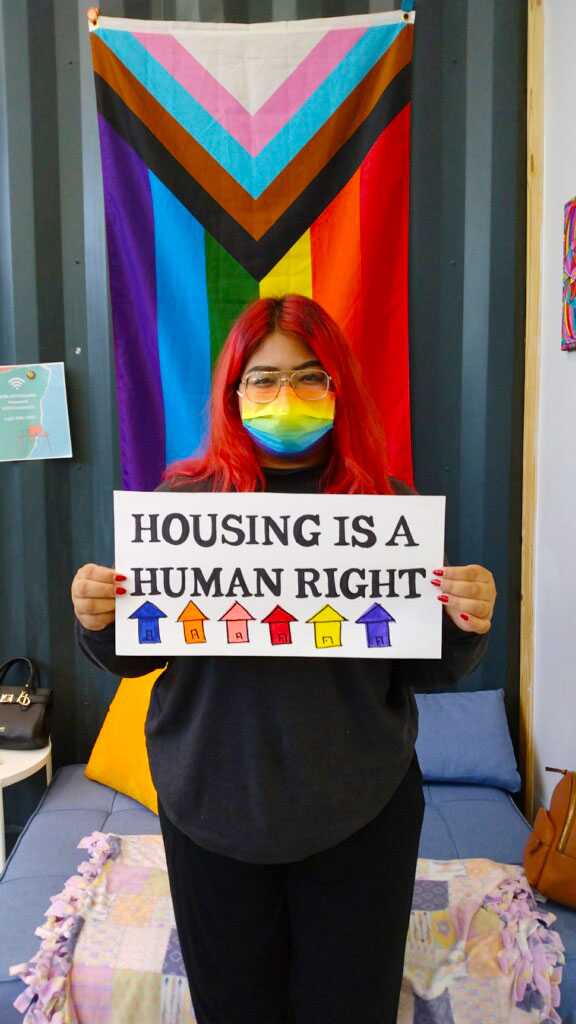
Andrea Olvera, a queer indigenous immigrant who has lived in Memphis most of her life, has similar experiences with advocacy. Thinking back on her work, she recognizes that she has always been an advocate from a young age, when she would translate documents and conversations for her mother. In a professional sense, Andrea’s advocacy work began in 2016, during Trump’s first presidency. At the time, she experienced a bout of homelessness, which led her to her current work as youth homelessness system improvement coordinator. Currently contracted for HUD under Point Source Youth, Andrea advocates for young adults experiencing homelessness.
“I want to empower people to reshape the structures,” Andrea said. She’s not interested in surface-level fixes; she wants to dismantle the systems that create inequity in the first place. “Everyone should be valued in their humanity.” In a world that frequently overlooks and pushes aside individuals who don’t fit oppressive standards, they want to dig deeper and give individuals the tools they need to rebuild their own lives.


Young people, especially those who’ve experienced homelessness, are at the heart of her advocacy. Andrea believes that youth hold the creativity, resilience, and insight needed to transform broken systems: “I want to take what we have and make it better, through the leadership of young people.” In order to truly inspire change across the country, she wants to ignite the flame inside young adults so they can be the spark of change within their own communities. In her work, those closest to the pain should be closest to power, so she works to support individuals who have experienced housing insecurity to create change in the homeless response system.
Her personal identity, like Phoenix’s, is central to her advocacy. As a young queer professional who uses she/they pronouns, Andrea sometimes faces resistance from older colleagues who misunderstand or dismiss her. Yet her presence has become a source of affirmation and connection for younger queer individuals, especially in rural areas where representation is scarce, providing a “warm hug” to the younger individuals who haven’t before had the chance to see an empowered queer professional. For many of the communities that Andrea works with, she believes that coming to those spaces as her full authentic self makes her more approachable and helps to strengthen community connections. And community is why she does the work she does– she values community above all in life and wants to be a healing force in her own community.

In a world that often demands assimilation or silence, both Phoenix and Andrea have chosen a different path—one of truth-telling, visibility, and love. Their stories remind us that advocacy doesn’t always look like megaphones or protest signs. Sometimes it looks like sitting with someone through a tough decision, being the first openly queer person in a space, or holding systems accountable with compassion and clarity.
What ties all of this together is a belief in people’s power—the power to survive, to lead, to heal, and to demand more. Through their work, Phoenix and Andrea show us that advocacy is not just something you do—it’s something you live. And in living it fully, they are building a more just and humane future for all of us.

