


by Zack Orsborn
Let me be real: I am struggling to stay off my phone and social media. I need to get off my phone. We all need to kill our phones.
It might be my mental illness, but I absolutely should not let the transference of pixels upset me like this. Reality surrounds me at all times. I have to constantly remind myself to stop caring about digital interaction. Retraining my brain, after so many years of digital consumption, can be exhausting. I have to get myself out of the pit, though.
I have to transcend the illusion and be an active participant in reality. I get to see how green the trees are. I get to touch soft velvet whenever I want. My feet can rest in dirt. I have people around me whose faces I can look into and see the gleam of life in their eyes.
This is what actually gives me energy.
I’ve taken many breaks from social media, and when I do, I can feel my thoughts breathe. I am less anxious, less on edge, and more creative. Original ideas pop up instead of using social media as an inspiration engine.
The innocent creativity of coding a MySpace layout and making glitter graphics has faded. Popular platforms like Instagram, TikTok, X, and Facebook have shifted from personal expression to intense commodification driven by advertising dollars.
Last year, I found myself in a strange place creatively. I was manufacturing a persona I thought I needed to advance my business. I was desperate to pursue my passion full-time. I did some cheesy things. I focused on likes and engagement, especially after a TikTok video I made reached over a million views. When a brand did something out of the norm, or something I thought was cool, I felt envy rising in me.
I often wonder: is it possible to be on social media without eventually questioning your worth? Are there people who can use it without their mental health being affected?
My gut says no. My gut says it was designed with some dark psychology in mind. To get us to post more. To push ourselves for an imaginary reward. To please a mysterious algorithm as unpredictable as my uncle off his Risperdal. Why did I feel forced to curate myself to game the algorithm? Why was I creating near-soulless content instead of creating from within? Why does the rush of likes, reshares, and reactions feel so good until it suddenly doesn’t?
Why am I frowning at a screen?
I would rather frown at reality. I would rather be seen in my full self, contradictions and all, not as pixels on a screen where I edited out my stutter. That is not creativity. That is curation.
My phone kills my creativity. My phone disconnects me from my true self. My phone blurs the line between what’s real and what’s just a passing trend that feels urgent if I’m not part of it.
In reality, I get to decide what has meaning, what moves me, and what inspires me to create.
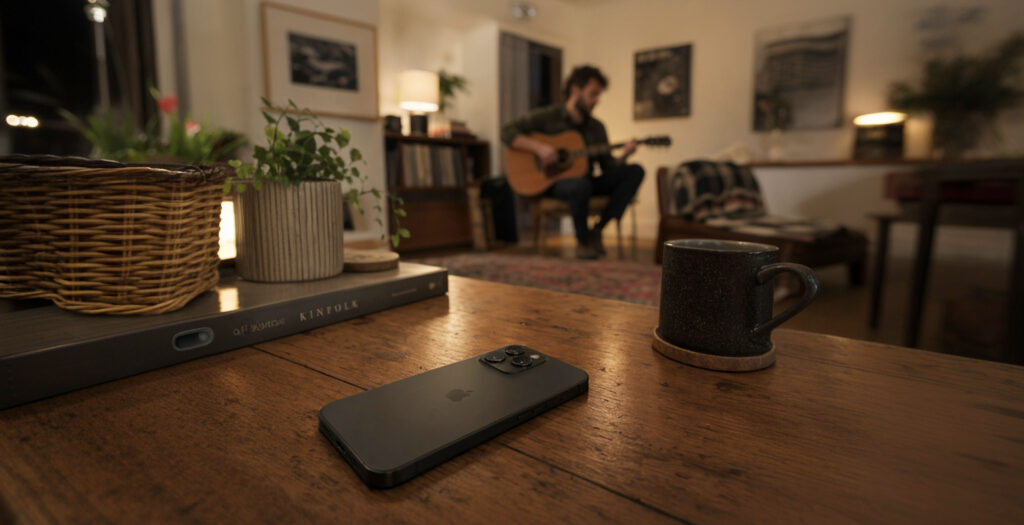
You can find reality if you can sit through the discomfort of being off your phone for a few hours. You don’t have to quit cold turkey. Start with 30 minutes a day. Put your phone away. Touch paper. Feel the texture as your pen moves across it. Pluck a guitar string. I’m this close to buying a wood flute.
You honor reality when you honor your creativity. In reality, you find clarity. You discover more about yourself.
But first, how did we get so dependent on our phones?
Flat, Foggy, and Fried
I believe my attachment to my phone is tied to a chemical dependence on dopamine, a neurotransmitter that drives motivation, pleasure, and reward.
I’ve been living on cheap dopamine. Cheap pleasure. Refreshing notifications. Watching who liked my post. Swiping through Stories without retaining anything.
YouTube suggested a video by Newel of Knowledge about getting out of dopamine holes. The presenter was engaging, and the video helped me better understand how pleasure and pain affect attention.
With cheap pleasure comes a drained brain that leaves us feeling flat, foggy, and fried. To escape that feeling, we chase more of it until we fall deeper into a dopamine hole.
He describes stepping away from it for several days and finding relief without forcing discipline:
“Unplug from the sources of cheap pleasure and give your brain and body one to three days to recover and reset.”
He explains:
“The energy, the motivation, the zest for life seems to disappear. Nothing feels fun anymore. You are not broken. You’re overstimulated and in what’s called a dopamine hole. Every spike in pleasure comes with a longer-lasting spike in discomfort. Every burst of pleasure must be paid back.”
Let’s detach from our phones. That way, we can rediscover ourselves and each other without screens.

