


In his new film Club Kid, the queer comedian and filmmaker explores fatherhood, growing older and finding purpose beyond the dance floor.
For generations of LGBTQ+ people, nightlife has been more than a place to dance. Gay bars, clubs and underground parties have offered spaces to discover identity, build friendships and find community. But what happens when the person who lives for the party begins to wonder what comes next?
That’s the question at the heart of Club Kid, the new film from actor, comedian and filmmaker Jordan Firstman, who takes a familiar queer character and gives him an unexpected responsibility: fatherhood.
Released in theaters November 6 by A24, the film marks Firstman’s feature directorial debut. He also wrote the screenplay and stars as Peter, a New York City nightlife promoter whose world changes when he discovers he has a 10-year-old son he never knew existed.
What begins as a story about excess and escape becomes something more personal: a look at queer adulthood, chosen identity and the relationships that challenge us to grow.
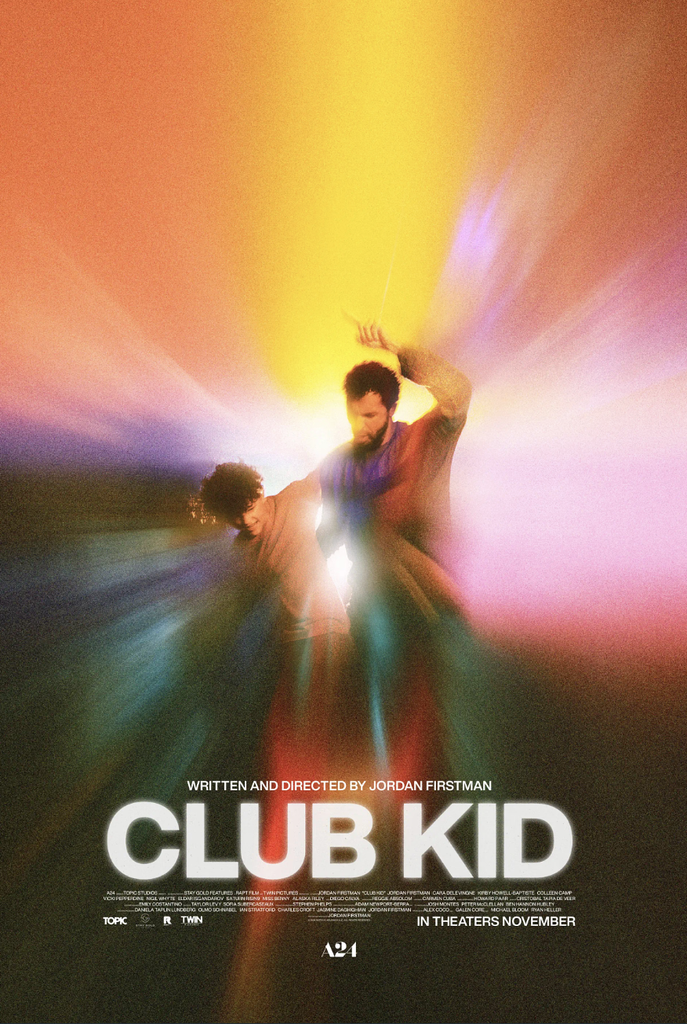
When the Party Changes
Peter has built his life around New York’s underground queer nightlife scene. His days and nights revolve around clubs, drugs, friendships and the freedom to live outside conventional expectations.
Then Arlo arrives.
Played by Reggie Absolom, the boy has lost his mother and suddenly needs the care of a father who has spent much of his adult life avoiding responsibility.
Peter isn’t prepared for parenthood. His lifestyle, relationships and sense of self have been shaped by a world where tomorrow can always wait.
But Arlo needs something different: consistency, care and someone willing to show up.
The film also stars Cara Delevingne as Peter’s business partner, Sophie, alongside Diego Calva, Kirby Howell-Baptiste and Colleen Camp.
Rather than treating Peter’s sexuality as an obstacle to becoming a parent, Club Kid asks a more interesting question. Can someone who has spent years chasing freedom learn to make room for another person without losing themselves?
Growing Up on Your Own Terms
Firstman has become known for his sharp humor, viral social media impressions and performances in projects including Rotting in the Sun, English Teacher and HBO’s I Love LA.
But Club Kid offers a more vulnerable side of his work.
In a November 4 interview with NPR, Firstman explained that the film grew out of his own experiences with nightlife and questions about getting older. While living in Berlin, he had begun examining the effects of a party-centered lifestyle and wondering what adulthood might look like beyond it.
He described wanting to make a coming-of-age story about a gay man in his 30s.
It’s a meaningful shift from the coming-of-age stories audiences typically see, where self-discovery happens during adolescence or early adulthood.
For many LGBTQ+ people, growing up doesn’t follow a traditional timeline.
Some spend their younger years hiding parts of themselves or navigating environments where being openly queer isn’t safe. Others don’t find their community, independence or sense of freedom until much later.
That can make the milestones associated with adulthood feel different. Marriage, children, homeownership and career success may not arrive in the expected order, or may not be personal goals at all.
Club Kid makes room for another possibility: that adulthood isn’t defined by following a particular path, but by understanding what matters to you and accepting responsibility for the people in your life.
More Than a Night Out
There is another important layer to Firstman’s story.
Queer nightlife has historically provided something that many LGBTQ+ people couldn’t find elsewhere: belonging.
For people living in smaller cities, rural communities or conservative parts of the country, a welcoming bar or dance floor can represent much more than entertainment.
These spaces can be places where friendships begin, chosen families form and people experience the freedom to be themselves.
That history makes the film’s exploration of nightlife especially interesting.
Peter’s challenge isn’t simply to abandon the party. It’s to understand whether the life he has built still gives him what he needs.
In an interview with RogerEbert.com, Firstman discussed the importance of queer clubs as places where people find one another and create shared rituals. His comments suggest that growing older doesn’t necessarily mean rejecting nightlife or the communities built around it.
Instead, the question becomes how those spaces and relationships evolve with us.
It’s a conversation that extends beyond New York and Los Angeles to LGBTQ+ communities throughout the South, where gathering spaces often play an essential role in building connections across generations.
Redefining Queer Family
At its center, Club Kid is a story about two people who need one another in ways neither fully understands.
Arlo needs a parent. Peter needs to discover whether he can become someone another person can depend on.
Their relationship challenges familiar ideas about what a family should look like.
Queer families have long existed in many forms, from biological parents and adoptive families to close friends and chosen relatives who provide lasting support.
Peter’s unexpected fatherhood adds another perspective to that conversation.
The film doesn’t suggest that having children is necessary for a fulfilling queer life. Instead, it explores how caring for someone can change a person’s understanding of love, responsibility and identity.
Firstman’s own life has also taken an unexpected turn. In his NPR interview, he shared that he became a biological father through sperm donation to his sister’s wife, adding a personal connection to the film’s exploration of family.
A New Chapter for Jordan Firstman
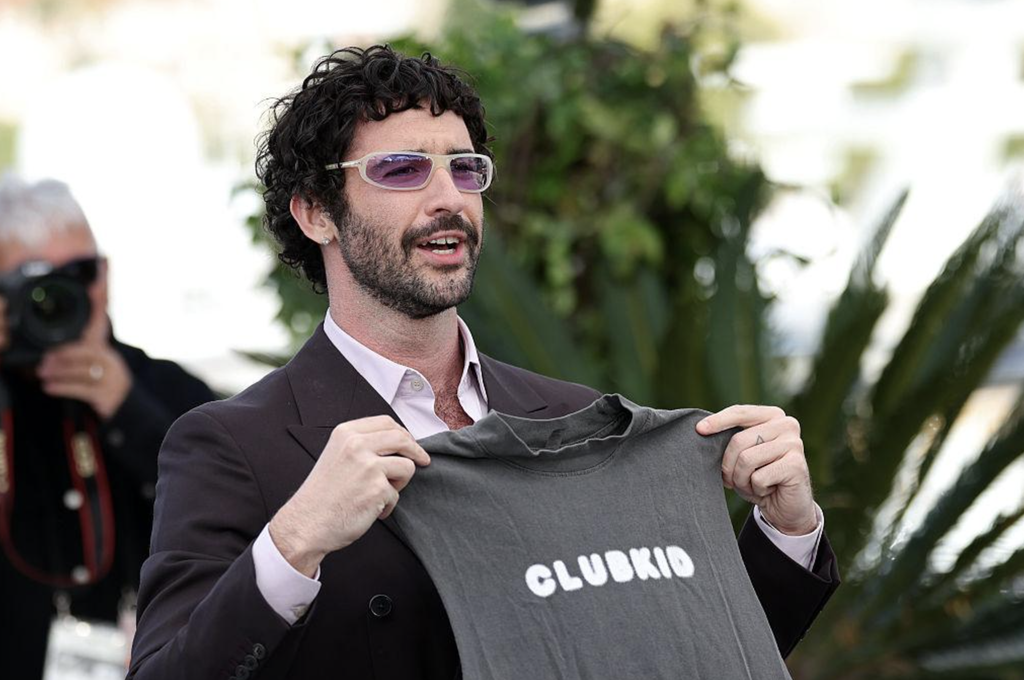
Club Kid premiered at the 2026 Cannes Film Festival, where it received the Un Certain Regard Prize, an important recognition for Firstman’s first feature as a director.
The film also earned attention at international festivals before its November theatrical release.
For a performer who first gained widespread recognition through short-form internet comedy, the project represents a significant creative step.
But its larger contribution may be the way it expands the stories audiences see about gay men.
Queer characters deserve stories about joy, sex, friendship and nightlife. They also deserve stories about aging, uncertainty, family, responsibility and the complicated work of becoming better versions of themselves.
Those experiences don’t have to exist in separate worlds.
With Club Kid, Firstman suggests that growing up doesn’t mean the music has to stop.
Sometimes it simply means learning who deserves a place beside you when the party is over.
Club Kid opened in U.S. theaters on November 6, 2026. The film is written and directed by Jordan Firstman and distributed by A24.
Watch the official trailer and find more information at A24’s Club Kid website.

