


The third annual gathering at the University of Memphis brought healthcare professionals, advocates and community leaders together to turn conversations into action.
By Ray Rico
What will it take to end the HIV epidemic in Memphis?
That question brought healthcare professionals, public health leaders, advocates and community organizations together at the University of Memphis for the 3rd Annual Shelby County HIV Summit.
The Memphis HIV Summit 2026 was filled with education, networking, thoughtful discussions and collaborative breakout sessions. But the most important work may be what happens next.
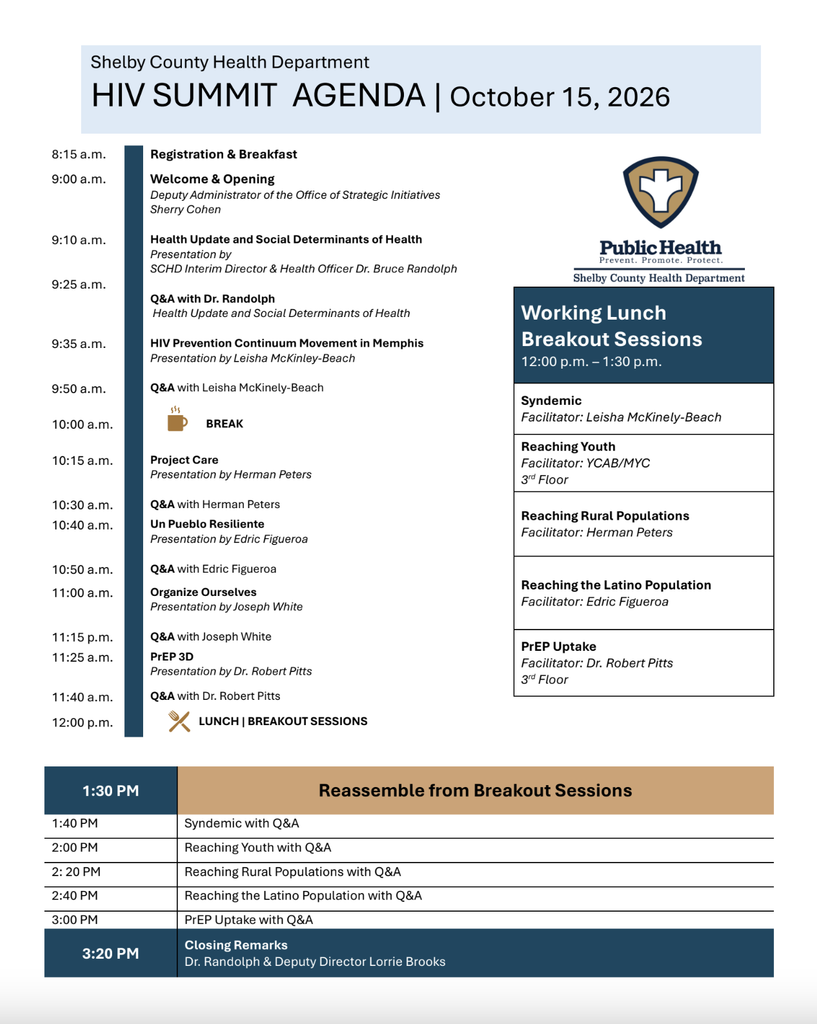
Representatives from the Shelby County Health Department, Tennessee Department of Health, University of Memphis, St. Jude, Memphis-Shelby County Schools, Friends For All, Choice Health Network, Hope House, and numerous other organizations joined the conversation.
The shared goal was clear: improve access to HIV prevention, testing, treatment and supportive services throughout Shelby County and the greater Memphis region.
Following the summit, organizers released a report outlining strategies developed during five breakout sessions. Together, those recommendations provide a practical starting point for continued community action.

HIV Prevention in Memphis: Addressing More Than HIV
One of the summit’s central messages was that HIV prevention cannot be separated from the everyday challenges people face.
Access to housing, transportation, mental healthcare and basic necessities can determine whether someone receives testing, starts treatment or remains connected to care.
The first breakout session, focused on the HIV prevention continuum, identified several priorities: addressing basic needs, expanding mental health resources, improving transportation access and making health education more inclusive.
Participants also emphasized supporting the well-being of healthcare workers and service providers.
The takeaway? Effective HIV prevention means meeting people where they are and recognizing the circumstances that affect their ability to access care.
Reaching Young People Through Authentic HIV Education
How do we make HIV education meaningful to younger generations?
According to summit participants, the answer begins with authenticity.
The youth-focused breakout session emphasized peer education, age-appropriate communication and opportunities for young people to make informed decisions about their health.
Rather than trying to sound trendy or relying on unfamiliar slang, participants recommended straightforward conversations built on trust.
The group also encouraged stronger partnerships with parents, churches, fraternities, sororities and other community organizations.
The message was simple: Young people should be part of shaping HIV education, not merely receiving it.
Building Trust With Latine Communities
Reaching Memphis’ Latine communities requires more than translating a flyer or posting information online.
The summit’s breakout session on Latine populations emphasized relationship-based outreach, culturally responsive healthcare and consistent engagement through trusted community spaces.
Participants recommended strengthening partnerships with churches, libraries and community organizations while coordinating resources and testing opportunities.
They also called for advocacy to protect access to programs such as Ryan White HIV/AIDS services and the AIDS Drug Assistance Program, particularly for immigrants facing barriers to healthcare.
Trust is built through relationships, visibility and follow-through.
For Memphis organizations, that means showing up consistently, listening to community needs and making services easier to understand and navigate.
Taking HIV Services Beyond Traditional Clinics
The summit also explored how to reach rural residents and people who may not regularly access traditional healthcare settings.
Participants proposed creative outreach ideas, including mobile testing opportunities, themed community events and partnerships with colleges, apartment communities and nightlife venues.
Social media platforms such as Instagram and TikTok were identified as useful tools for promoting testing opportunities and connecting with audiences who might not encounter traditional public health messaging.
These ideas were proposed strategies, not announcements of new programs.
The larger recommendation was to make prevention services more accessible, familiar and convenient.
Expanding PrEP Access and Keeping People Connected to Care
PrEP, or pre-exposure prophylaxis, is medication that significantly reduces the risk of acquiring HIV when taken as prescribed.
The summit’s PrEP breakout session focused on removing obstacles that prevent people from starting or continuing prevention medication.
Recommendations included clearer information about costs and financial assistance, multilingual services, flexible appointment options, expanded laboratory partnerships and stronger patient navigation.
Participants also emphasized the importance of follow-up and ongoing support.
Making PrEP available is only one part of the solution. Helping people access it, understand their options and remain connected to care is equally important.
From Conversation to Action: What’s Next for Memphis?
In the summit’s post-event report, moderator Sherry Cohen, deputy administrator of the Shelby County Health Department’s Office of Strategic Initiatives, described the gathering as an example of what collaboration and shared leadership can accomplish.
The report encouraged participants to use the strategies developed throughout the day as a continuing guide for partnership and action.
In a follow-up message to attendees, Krista reflected on the energy of the gathering:
“We learned, we expressed ourselves, we networked, and had lively engagement. The energy was inspiring!”
That energy now has an opportunity to become meaningful progress.
The summit’s organizers also identified a goal for 2027: broaden outreach and participation to include more community advocates, HIV champions and service organizations across the Memphis tri-state area, including East Arkansas and Mississippi.
The event’s guiding message, “We’re Here Until HIV Isn’t,” serves as a reminder that ending the epidemic requires sustained attention, resources and collaboration.
Take Action: HIV Testing, PrEP and Community Resources in Memphis
You don’t have to work in public health to be part of the solution.
Get tested. The Shelby County Health Department offers free, confidential HIV testing. Residents can also explore free at-home HIV test kits.
Learn about PrEP and PEP. Visit the county’s PrEP and PEP resource page or call 901-222-9400 for information about prevention medication and available assistance. PEP is an emergency prevention option that must be started within 72 hours after a possible HIV exposure.
Connect with community providers. OUTMemphis provides free HIV and STI testing, while End HIV 901 offers a directory of local prevention, testing and treatment resources.
Bring education into your community. Schools, faith groups, businesses and community organizations can help expand awareness and connect people to services. To inquire about hosting an HIV testing event, contact the Shelby County Health Department at ShelbyTNHealth@shelbycountytn.gov.
Stay involved. Support organizations doing this work, share accurate information, challenge HIV stigma and look for opportunities to participate in future community discussions and the 2027 summit.
Thank You to the People Moving Memphis Forward
The third annual HIV Summit demonstrated the strength of a community willing to share ideas, ask difficult questions and work across organizational boundaries.
Special recognition goes to the Shelby County Health Department, Dr. Bruce Randolph, Lorrie Brooks, Gilead and ViiV Healthcare, who were acknowledged in the summit’s post-event report.
And to every attendee, speaker, facilitator, volunteer and participating organization: thank you for your time, attention, ideas and commitment to the health of our community.
The conversations were important. The strategies are promising.
Now comes the work of putting them into action.
Because ending HIV in Memphis will take all of us.
We’re Here Until HIV Isn’t.
See our coverage from 2025’s event.
See our coverage from 2024’s inaugural event.
Do you need Local HIV and STI resources? Read our Memphis Guide to STI and HIV Testing

